
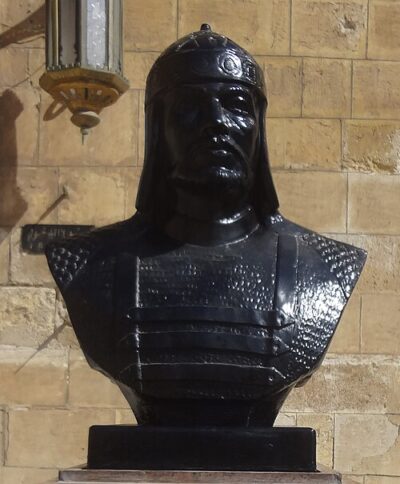
Baibars
Baibars was the 4th Sultan of Egypt from 1260 to 1277. Born July 19, 1223, in unknown. Died July 1, 1277, in Damascus. Positions held include Sultan of Egypt (1260–1277).
Facts
17 facts · 0 confirmed by two sources · 3 cited · 11 from one source · 3 where the sources disagree
What’s different
- Born: we show July 19, 1223 (Sources disagree). Wikidata also lists 1228
- Died: we show July 1, 1277 (Sources disagree). Wikidata also lists 1277
- Born in: we show unknown (Sources disagree). Wikidata also lists Cumania
Where this comes from
Papalocal keeps its own record. It started from these sources; what each one said is kept here as it was copied, so a change on their side never changes this page by itself. Tap one to read its version.
What Wikidata says · copied November 16, 2026 · revision 2568063206
- Described as
- 4th Sultan of Egypt from 1260 to 1277
- Other names
- al-Malik al-Ẓāhir Baybars I al-Bunduqdārī, Rukn al-Dīn, Baybars I, Abu al-Futuh, al-Malik al-Zahir Rukn al-Din al-Salihi al-Bundukdari., Al-Malik al-Zahir Rukn al-Din Baibars al-Bunduqdari
- Born
- July 19, 1223 · 1 reference; 1228 · 1 reference
- Died
- July 1, 1277 · 2 references; 1277 · 1 reference
- Born in
- unknown · 1 reference; Cumania
- Died in
- Damascus · 1 reference
- Buried in
- Al-Zahiriyah Library · 1 reference
- Cause of death
- intoxication
- Citizen of
- Medieval Egypt
- Occupation
- ruler · 1 reference; military commander · 1 reference; governor · 1 reference; Conqueror · 1 reference; military leader · 1 reference
- Positions held
- Sultan of Egypt (1260–1277) · 1 reference
- Children
- Al-Said Barakah · 1 reference; Solamish · 1 reference
- Religion
- Islam; Sunni Islam
- Wikipedias with a page
- 52
Wikidata item Q192960 (wikidata.org/wiki/Q192960), public domain (CC0). Copied November 16, 2026.
What Wikipedia says · copied November 16, 2026 · revision 1384753260
Al-Malik al-Zahir Rukn al-Din Baybars al-Bunduqdari (Arabic: الْمَلِك الظَّاهِر رُكْن الدِّين بَيْبَرْس الْبُنْدُقْدَارِيّ; 1223/1228 – 30 June 1277), commonly known as Baibars or Baybars (بَيْبَرْس) and nicknamed Abu al-Futuh (أَبُو الْفُتُوح, lit. 'Father of Conquests'), was the fourth Mamluk sultan of Egypt and Syria, ruling from 1260 to 1277. He is noted for leading the vanguard of the Mamluk army that inflicted the first substantial defeat of the Mongols at the Battle of Ain Jalut, as well as his successful campaigns against the Crusaders. Through a combination of diplomacy and military action, he ushered in an age of Mamluk dominance in the Eastern Mediterranean.
Of Turkic Kipchak origin, Baybars was sold into slavery during the Mongol invasions and ultimately entered the service of Ayyubid sultan As-Salih Ayyub. He subsequently rose to become a prominent military leader in Egypt. In 1250, he was a commander of the Muslim forces that defeated and captured King Louis IX of France during the Seventh Crusade, and led the group of Mamluks that assassinated sultan Turanshah. Later, he played a significant role in the victory over the invading Mongol army at Ain Jalut and soon thereafter orchestrated the assassination of sultan Qutuz, seizing the throne for himself.
As sultan, Baybars set about asserting Mamluk authority in Syria. After securing the loyalty of Ayyubid emirs, he launched extensive campaigns against the Crusader states, culminating in the capture of Antioch in 1268. He continued to fend off threats from the Mongols by engaging with the Ilkhanate, while forging an alliance with the Golden Horde. In 1276, he launched an expedition into Nubia that concluded with the subjugation of Makuria.
From the Wikipedia article “Baybars” (en.wikipedia.org/wiki/Baybars), by its contributors, under CC BY-SA 4.0 (creativecommons.org/licenses/by-sa/4.0/). Copied November 16, 2026; not changed.
Confirmed Two sources agree. Cited One source, and it names where it got it. One source One source, without a reference of its own. Sources disagree The sources disagree. We show the best-supported value and keep theirs below.
