
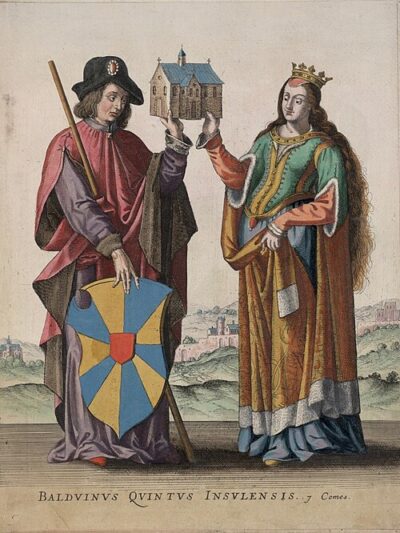
Baldwin V of Flanders
Baldwin V of Flanders was a Count of Flanders. Born August 19, 1012, in Arras. Died September 1, 1067, in Lille.
Facts
14 facts · 2 confirmed by two sources · 4 cited · 8 from one source
Where this comes from
Papalocal keeps its own record. It started from these sources; what each one said is kept here as it was copied, so a change on their side never changes this page by itself. Tap one to read its version.
What Wikidata says · copied November 16, 2026 · revision 2559422522
- Described as
- Count of Flanders (1012-1067)
- Other names
- Baldwin V, Baldwin V, Count of Flanders
- Born
- August 19, 1012
- Died
- September 1, 1067
- Born in
- Arras
- Died in
- Lille
- Buried in
- Collégiale Saint-Pierre de Lille
- Occupation
- politician
- Spouse
- Adela of France (1028–) · 2 references
- Children
- Matilda of Flanders · 1 reference; Baldwin VI, Count of Flanders; Robert I, Count of Flanders
- Father
- Baldwin IV · 1 reference
- Mother
- Ogive of Luxembourg · 1 reference
- Siblings
- Judith of Flanders, Countess of Northumbria · 1 reference; unknown daughter de Vlaanderen · 1 reference
- Wikipedias with a page
- 33
Wikidata item Q333384 (wikidata.org/wiki/Q333384), public domain (CC0). Copied November 16, 2026.
What Wikipedia says · copied November 16, 2026 · revision 1383734572
Baldwin V (c. 19 August 1012– 1 September 1067) was Count of Flanders from 1035 until his death. He secured the personal union between the counties of Flanders and Hainaut and maintained close links to the English monarchy, which was overthrown by his son-in-law, William the Conqueror, near the end of his life.
- Born, in its opening lines
- August 19, 1012
- Died, in its opening lines
- September 1, 1067
From the Wikipedia article “Baldwin V of Flanders” (en.wikipedia.org/wiki/Baldwin_V_of_Flanders), by its contributors, under CC BY-SA 4.0 (creativecommons.org/licenses/by-sa/4.0/). Copied November 16, 2026; not changed.
Confirmed Two sources agree. Cited One source, and it names where it got it. One source One source, without a reference of its own. Sources disagree The sources disagree. We show the best-supported value and keep theirs below.
