
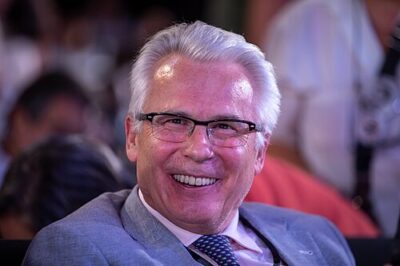
Baltasar Garzón
Baltasar Garzón is a Spanish former judge. Born October 26, 1955, in Torres. Positions held include Member of the Congress of Deputies (1993–1994). Educated at University of Seville. Awards include Hermann Kesten Prize, Medal of Andalusia and Gold Medal of the Order of Merit of the National Plan on Drugs.
Facts
18 facts · 1 confirmed by two sources · 9 cited · 8 from one source
Where this comes from
Papalocal keeps its own record. It started from these sources; what each one said is kept here as it was copied, so a change on their side never changes this page by itself. Tap one to read its version.
What Wikidata says · copied November 16, 2026 · revision 2557806879
- Described as
- Spanish former judge
- Other names
- Baltasar Garzón Real
- Born
- October 26, 1955 · 4 references
- Born in
- Torres
- Citizen of
- Spain · 1 reference
- Occupation
- judge · 1 reference; writer; politician; university teacher; lawyer; jurist · 1 reference
- Positions held
- Member of the Congress of Deputies (1993–1994) · 1 reference
- Education
- University of Seville
- Member of
- National Court of Spain (1988–2012)
- Awards
- Hermann Kesten Prize · 1 reference; Medal of Andalusia (2008) · 2 references; Gold Medal of the Order of Merit of the National Plan on Drugs (2001) · 1 reference
- Field
- justice and judicial activities · 1 reference
- Spouse
- Dolores Delgado (2023–) · 1 reference
- Children
- María Garzón Molina · 1 reference
- Wikipedias with a page
- 28
Wikidata item Q318808 (wikidata.org/wiki/Q318808), public domain (CC0). Copied November 16, 2026.
What Wikipedia says · copied November 16, 2026 · revision 1379230055
Baltasar Garzón Real (Spanish pronunciation: [baltaˈsaɾ ɣaɾˈθon]; born 26 October 1955) is a Spanish former judge in Spain's central criminal court, the Audiencia Nacional, the court responsible for investigation of the most serious criminal cases, including terrorism, organised crime, crimes against humanity, Illegal drug trade, money laundering and state terrorism.
Garzón came to international prominence in 1998 by having former Chilean dictator Augusto Pinochet arrested in London for extradition based on international human rights law. The judge had already become well known in Spain for investigating Basque separatist group ETA and for his probe into government death squads in the 1980s which is thought to have helped to bring down the Socialist government in 1996 elections. In 2005, as a result of Garzón´s indictment of a group of men (including Osama Bin Laden) for their alleged membership of a terrorist group, 24 were put on trial in Europe's biggest trial of alleged al-Qaeda operatives.
In 2009 Garzón made a controversial judgement that the acts of repression committed by the Franco regime were crimes against humanity.
In 2010, Garzón was suspended from judicial activity and in 2012 he was convicted of willful abuse of power and disbarred for a period of 11 years. The trials and conviction were condemned internationally including by the International Commission of Jurists and the United Nations Human Rights Committee on the basis that the case was arbitrary and did not comply with the principles of judicial independence and impartiality and violated the International Covenant on Civil and Political Rights.
After 2012, Garzón has held many positions including as director of the legal defense of Wikileaks founder Julian Assange; as an advisor to the International Criminal Court; in Argentina as director of international advice at the Secretariat of Human Rights of the Ministry of Justice and Human Rights; in Colombia, he advised the Attorney General's Office; and in Ecuador, he was appointed coordinator of the International Oversight Committee on Justice Reform.
Garzón holds honorary doctorates from twenty-two universities around the world and is the recipient of numerous prizes.
- Born, in its opening lines
- October 26, 1955
From the Wikipedia article “Baltasar Garzón” (en.wikipedia.org/wiki/Baltasar_Garzón), by its contributors, under CC BY-SA 4.0 (creativecommons.org/licenses/by-sa/4.0/). Copied November 16, 2026; not changed.
Confirmed Two sources agree. Cited One source, and it names where it got it. One source One source, without a reference of its own. Sources disagree The sources disagree. We show the best-supported value and keep theirs below.
