
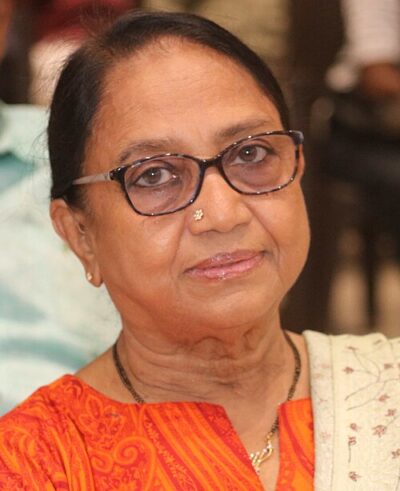
Banu Mushtaq is an Indian writer and activist. Born April 3, 1948, in Hassan. Known for Heart Lamp: Selected Stories. Awards include Karnataka Sahitya Academy Award, Daana Chintamani Attimabbe Award and International Booker Prize.
Facts
15 facts · 1 confirmed by two sources · 10 cited · 4 from one source
Where this comes from
Papalocal keeps its own record. It started from these sources; what each one said is kept here as it was copied, so a change on their side never changes this page by itself. Tap one to read its version.
What Wikidata says · copied November 16, 2026 · revision 2563972116
- Described as
- Indian writer and activist (born 1948)
- Born
- April 3, 1948 · 1 reference
- Born in
- Hassan · 1 reference
- Citizen of
- India
- Occupation
- novelist; poet; writer · 1 reference; jurist · 1 reference
- Known for
- Heart Lamp: Selected Stories
- Awards
- Karnataka Sahitya Academy Award · 1 reference; Daana Chintamani Attimabbe Award · 1 reference; International Booker Prize (2025) · 1 reference
- Field
- literary activity · 1 reference; belletristic literature · 1 reference; law · 1 reference; activism · 1 reference
- Wikipedias with a page
- 31
Wikidata item Q15719655 (wikidata.org/wiki/Q15719655), public domain (CC0). Copied November 16, 2026.
What Wikipedia says · copied November 16, 2026 · revision 1383731916
Banu Mushtaq (born 3 April 1948) is an Indian Kannada-language writer, activist, and lawyer from Karnataka. She is best known for Heart Lamp, a selection of her short stories translated by Deepa Bhasthi, which won the International Booker Prize in 2025. She has published six short story collections, a novel, an essay collection, and a poetry collection. Her work has been translated into Urdu, Hindi, Tamil, Malayalam and English.
- Born, in its opening lines
- April 3, 1948
From the Wikipedia article “Banu Mushtaq” (en.wikipedia.org/wiki/Banu_Mushtaq), by its contributors, under CC BY-SA 4.0 (creativecommons.org/licenses/by-sa/4.0/). Copied November 16, 2026; not changed.
Confirmed Two sources agree. Cited One source, and it names where it got it. One source One source, without a reference of its own. Sources disagree The sources disagree. We show the best-supported value and keep theirs below.
