
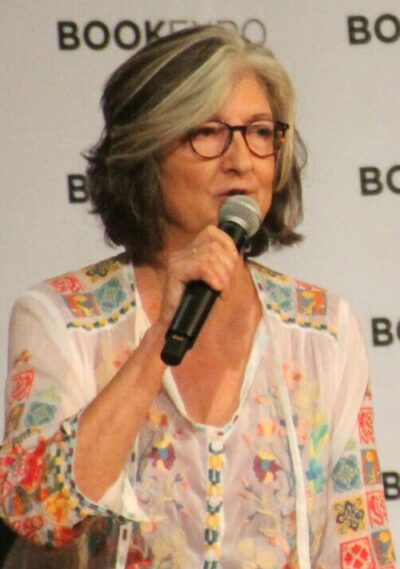
Barbara Kingsolver
Barbara Kingsolver is an American author, poet and essayist. Born April 8, 1955, in Annapolis. Known for The Poisonwood Bible and Animal, Vegetable, Miracle. Educated at University of Arizona and DePauw University. Awards include National Humanities Medal, Women's Prize for Fiction (2 times) and Pulitzer Prize for Fiction.
Facts
20 facts · 1 confirmed by two sources · 10 cited · 9 from one source
Where this comes from
Papalocal keeps its own record. It started from these sources; what each one said is kept here as it was copied, so a change on their side never changes this page by itself. Tap one to read its version.
What Wikidata says · copied November 13, 2026 · revision 2568044391
- Described as
- American author, poet and essayist
- Born
- April 8, 1955 · 5 references
- Born in
- Annapolis · 2 references
- Citizen of
- United States
- Occupation
- novelist · 1 reference; poet · 1 reference; essayist · 1 reference; writer · 2 references
- Education
- University of Arizona; DePauw University
- Known for
- The Poisonwood Bible; Animal, Vegetable, Miracle
- Awards
- National Humanities Medal (2000) · 1 reference; Women's Prize for Fiction (2 times) (2010, 2023) · 1 reference; Pulitzer Prize for Fiction (2023) · 1 reference
- Field
- essay
- Lived in
- Washington County; Tucson; Greencastle
- Website
- http://kingsolver.com/ · 3 references; http://barbarakingsolver.net/ · 1 reference
- Wikipedias with a page
- 47
Wikidata item Q1264643 (wikidata.org/wiki/Q1264643), public domain (CC0). Copied November 13, 2026.
What Wikipedia says · copied November 13, 2026 · revision 1381239870
Barbara Ellen Kingsolver (born April 8, 1955) is an American novelist, essayist, and poet. Her widely known works include The Poisonwood Bible, the tale of a missionary family in the Congo; and Animal, Vegetable, Miracle, a nonfiction account of her family's attempts to eat locally. In 2023, she was awarded the Pulitzer Prize for Fiction for the novel Demon Copperhead. Her work often focuses on topics such as social justice, biodiversity, and the interaction between humans and their communities and environments.
Kingsolver has received numerous awards, including the Dayton Literary Peace Prize's Richard C. Holbrooke Distinguished Achievement Award in 2011 and the National Humanities Medal. After winning for The Lacuna in 2010 and Demon Copperhead in 2023, Kingsolver became the first author to win the Women's Prize for Fiction twice. Since 1993, each one of her book titles has been on the New York Times Best Seller list.
Kingsolver was raised in rural Kentucky, lived briefly in the Congo in her early childhood, and as of 2024 lives in Virginia, in the Appalachia region. Kingsolver earned degrees in biology, ecology, and evolutionary biology at DePauw University and the University of Arizona, and worked as a freelance writer before she began writing novels. In 2000, the politically progressive Kingsolver established the Bellwether Prize to support "literature of social change".
- Born, in its opening lines
- April 8, 1955
From the Wikipedia article “Barbara Kingsolver” (en.wikipedia.org/wiki/Barbara_Kingsolver), by its contributors, under CC BY-SA 4.0 (creativecommons.org/licenses/by-sa/4.0/). Copied November 13, 2026; not changed.
Confirmed Two sources agree. Cited One source, and it names where it got it. One source One source, without a reference of its own. Sources disagree The sources disagree. We show the best-supported value and keep theirs below.
