
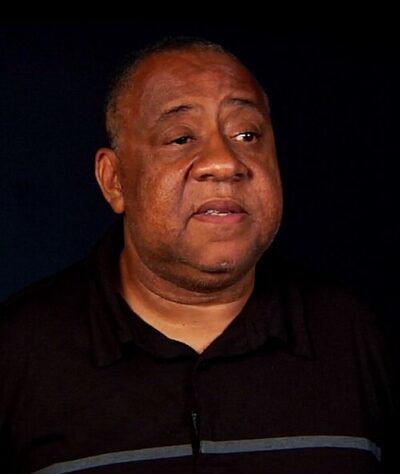
Barry Shabaka Henley
Barry Shabaka Henley is an American actor. Born September 15, 1954, in New Orleans. Educated at San Francisco Polytechnic High School. Awards include Drama Desk Awards, Obie Award and Laurence Olivier Awards.
Facts
12 facts · 1 confirmed by two sources · 0 cited · 11 from one source
Where this comes from
Papalocal keeps its own record. It started from these sources; what each one said is kept here as it was copied, so a change on their side never changes this page by itself. Tap one to read its version.
What Wikidata says · copied November 15, 2026 · revision 2552715018
- Described as
- American actor (born 1954)
- Born
- September 15, 1954 · 1 reference
- Born in
- New Orleans
- Citizen of
- United States
- Occupation
- actor; stage actor; television actor; film actor; television presenter
- Education
- San Francisco Polytechnic High School · 1 reference
- Awards
- Drama Desk Awards · 1 reference; Obie Award · 1 reference; Laurence Olivier Awards · 1 reference
- Wikipedias with a page
- 24
Wikidata item Q809099 (wikidata.org/wiki/Q809099), public domain (CC0). Copied November 15, 2026.
What Wikipedia says · copied November 15, 2026 · revision 1383186018
Barry Shabaka Henley (born Barry Joseph Henley; September 15, 1954) is an American character actor. Henley has appeared as a regular in a number of television series, has numerous film credits, and is a fixture in films by director Michael Mann, having worked with the director three times. From 2019 to 2024, he co-starred in the CBS sitcom Bob Hearts Abishola as Uncle Tunde.
His stage name, Shabaka, is taken from a Pharaoh from Egypt's 25th dynasty, who ruled from 721 to 707 BC.
- Born, in its opening lines
- September 15, 1954
From the Wikipedia article “Barry Shabaka Henley” (en.wikipedia.org/wiki/Barry_Shabaka_Henley), by its contributors, under CC BY-SA 4.0 (creativecommons.org/licenses/by-sa/4.0/). Copied November 15, 2026; not changed.
Confirmed Two sources agree. Cited One source, and it names where it got it. One source One source, without a reference of its own. Sources disagree The sources disagree. We show the best-supported value and keep theirs below.
