
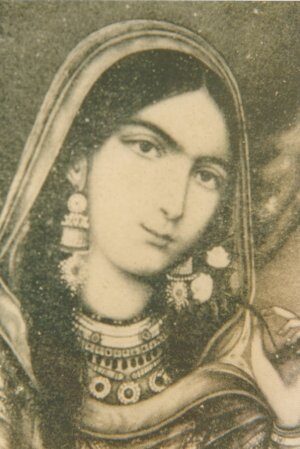
Begum Hazrat Mahal was an Empress of Awadh. Born 1820, in Faizabad. Died April 7, 1879, in Kathmandu.
Facts
12 facts · 2 confirmed by two sources · 0 cited · 10 from one source
Where this comes from
Papalocal keeps its own record. It started from these sources; what each one said is kept here as it was copied, so a change on their side never changes this page by itself. Tap one to read its version.
What Wikidata says · copied November 16, 2026 · revision 2547317005
- Described as
- Empress of Awadh
- Born
- 1820
- Died
- April 7, 1879 · 1 reference
- Born in
- Faizabad
- Died in
- Kathmandu
- Buried in
- Kathmandu
- Citizen of
- British Raj
- Occupation
- activist; freedom fighter
- Spouse
- Wajid Ali Shah
- Children
- Birjis Qadir
- Religion
- Islam
- Lived in
- Lucknow
- Wikipedias with a page
- 32
Wikidata item Q717960 (wikidata.org/wiki/Q717960), public domain (CC0). Copied November 16, 2026.
What Wikipedia says · copied November 16, 2026 · revision 1376726574
Begum Hazrat Mahal (c. 1820 – 7 April 1879), also known as the Begum of Awadh, was the second wife of Nawab of Awadh Wajid Ali Shah, and the regent of Awadh in 1857–1858. She is known for the leading role she had in the rebellion against the British East India Company during the Indian Rebellion of 1857.
After her husband was exiled to Calcutta and the Indian Rebellion broke out, she made her son, Prince Birjis Qadr, the Wali (ruler) of Awadh, with herself as regent during his minority. However, she was forced to abandon this role after a short reign. By way of Hallaur, she finally found asylum in Nepal, where she died in 1879. Her role in the rebellion has given her a heroine status in the post-colonial history of India.
- Born, in its opening lines
- c. 1820
- Died, in its opening lines
- April 7, 1879
From the Wikipedia article “Begum Hazrat Mahal” (en.wikipedia.org/wiki/Begum_Hazrat_Mahal), by its contributors, under CC BY-SA 4.0 (creativecommons.org/licenses/by-sa/4.0/). Copied November 16, 2026; not changed.
Confirmed Two sources agree. Cited One source, and it names where it got it. One source One source, without a reference of its own. Sources disagree The sources disagree. We show the best-supported value and keep theirs below.
