
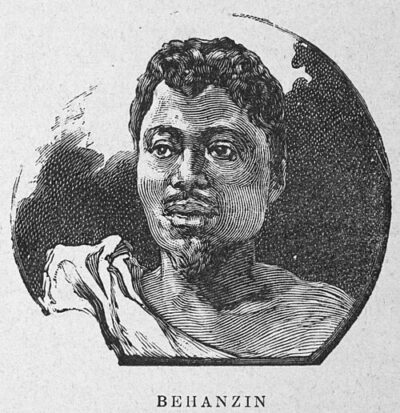
Béhanzin
Béhanzin was a last king of Dahomey. Born September 7, 1844. Died December 10, 1906, in Blida. Positions held include King of Dahomey.
Facts
9 facts · 1 confirmed by two sources · 0 cited · 7 from one source · 1 where the sources disagree
What’s different
- Born: we show September 7, 1844 (Sources disagree). Wikipedia says c. 1845
Where this comes from
Papalocal keeps its own record. It started from these sources; what each one said is kept here as it was copied, so a change on their side never changes this page by itself. Tap one to read its version.
What Wikidata says · copied November 18, 2026 · revision 2568806893
- Described as
- last king of Dahomey (1845–1906)
- Other names
- Behanzin, Gbehanzin
- Born
- September 7, 1844
- Died
- December 10, 1906
- Died in
- Blida
- Cause of death
- pneumonia
- Citizen of
- Dahomey
- Occupation
- monarch
- Positions held
- King of Dahomey
- Children
- Ouanilo Béhanzin
- Father
- Glele
- Wikipedias with a page
- 23
Wikidata item Q2366953 (wikidata.org/wiki/Q2366953), public domain (CC0). Copied November 18, 2026.
What Wikipedia says · copied November 18, 2026 · revision 1384245142
Gbehanzin, also known as Béhanzin (c. 1845 – 10 December 1906), is considered the eleventh (if Adandozan is not counted) King of Dahomey, modern-day Republic of Benin. Upon taking the throne, he changed his name from Kondo.
Following his father Glele's suicide, Béhanzin ascended the throne in January 1890 and ruled until 1894, when he was defeated by the French in the Second Franco-Dahomean War and exiled to Martinique. Béhanzin was Dahomey's last independent ruler established through traditional power structures. He led the resistance to French colonization of his kingdom, during the Dahomey Wars.
- Born, in its opening lines
- c. 1845
- Died, in its opening lines
- December 10, 1906
From the Wikipedia article “Béhanzin” (en.wikipedia.org/wiki/Béhanzin), by its contributors, under CC BY-SA 4.0 (creativecommons.org/licenses/by-sa/4.0/). Copied November 18, 2026; not changed.
Confirmed Two sources agree. Cited One source, and it names where it got it. One source One source, without a reference of its own. Sources disagree The sources disagree. We show the best-supported value and keep theirs below.
