
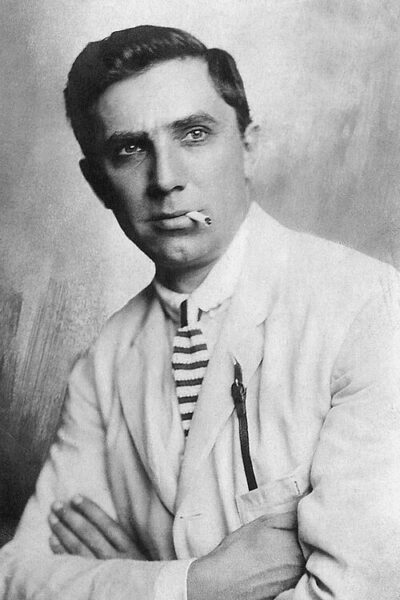
Bela Lugosi
Bela Lugosi was a Hungarian-American actor. Born October 20, 1882, in Lugoj. Died August 16, 1956, in Hollywood. Awards include star on Hollywood Walk of Fame.
Facts
22 facts · 2 confirmed by two sources · 4 cited · 16 from one source
Where this comes from
Papalocal keeps its own record. It started from these sources; what each one said is kept here as it was copied, so a change on their side never changes this page by itself. Tap one to read its version.
What Wikidata says · copied November 13, 2026 · revision 2568862698
- Described as
- Hungarian-American actor (1882–1956)
- Born
- October 20, 1882 · 10 references
- Died
- August 16, 1956 · 9 references
- Born in
- Lugoj
- Died in
- Hollywood · 1 reference
- Buried in
- Holy Cross Cemetery
- Cause of death
- myocardial infarction
- Name at birth
- Blaskó Béla Ferenc Dezső
- Citizen of
- Hungary; United States
- Occupation
- film actor · 1 reference; stage actor; trade unionist; actor · 1 reference; military personnel; military officer
- Genre
- horror film
- Awards
- star on Hollywood Walk of Fame · 1 reference
- Spouse
- Ilona Montagh (1921–1925) · 1 reference; Lillian Arch (1933–1953) · 1 reference
- Children
- Bela G. Lugosi
- Height
- 1.85 m (6 ft 1 in)
- Website
- https://belalugosi.com
- Wikipedias with a page
- 68
Wikidata item Q34529 (wikidata.org/wiki/Q34529), public domain (CC0). Copied November 13, 2026.
What Wikipedia says · copied November 13, 2026 · revision 1385439356
Béla Ferenc Dezső Blaskó (October 20, 1882 – August 16, 1956), better known by his stage name Béla Lugosi, was a Hungarian–American actor. He is best remembered for portraying Count Dracula in the horror film classic Dracula (1931), Ygor in both Son of Frankenstein (1939) and Ghost of Frankenstein (1942) and his roles in many other horror films from 1931 through 1956.
Lugosi began acting on the Hungarian stage in 1901, appearing in more than 170 productions. Beginning in 1917, he performed in Hungarian silent films. During World War I, he served as a corporal (in Austrian German: Zugsführer; in Hungarian: szakaszvezető) in the Austro-Hungarian Army from 1914 to 1916. After the failed Hungarian Communist Revolution of 1919, Lugosi chose to immigrate to Germany due to his Socialist party activities. He acted in several films in Weimar Germany, before arriving in New Orleans as a seaman on a merchant ship, then making his way north to New York City and Ellis Island.
In 1927, he starred as Dracula in a Broadway adaptation of Bram Stoker's novel, moving with the play to the West Coast in 1928 and settling down in Hollywood. He later starred in the 1931 film version of Dracula directed by Tod Browning and produced by Universal Pictures. Through the 1930s, he occupied an important niche in horror films, but his notoriety as Dracula and thick Hungarian accent greatly limited the roles offered to him, and he unsuccessfully tried for years to avoid typecasting.
He co-starred in a number of films with fellow horror icon Boris Karloff, including The Black Cat (1934), The Raven (1935), and Son of Frankenstein (1939).
By this time, Lugosi had been receiving regular medication for sciatic neuritis, and he became addicted to doctor-prescribed morphine and methadone. This drug dependence (and his gradually worsening alcoholism) was becoming apparent to producers, and after 1948's Abbott and Costello Meet Frankenstein, Lugosi experienced a career decline and mostly appeared in low-budget films, some of which were directed by Ed Wood. His collaborations with Wood include a brief appearance in Plan 9 from Outer Space, released posthumously in 1957.
Lugosi married five times and had one son, Béla G. Lugosi (with his fourth wife, Lillian). Lugosi would eventually have four grandchildren and seven great-grandchildren, although he did not live long enough to meet any of them.
- Born, in its opening lines
- October 20, 1882
- Died, in its opening lines
- August 16, 1956
From the Wikipedia article “Bela Lugosi” (en.wikipedia.org/wiki/Bela_Lugosi), by its contributors, under CC BY-SA 4.0 (creativecommons.org/licenses/by-sa/4.0/). Copied November 13, 2026; not changed.
Confirmed Two sources agree. Cited One source, and it names where it got it. One source One source, without a reference of its own. Sources disagree The sources disagree. We show the best-supported value and keep theirs below.
