
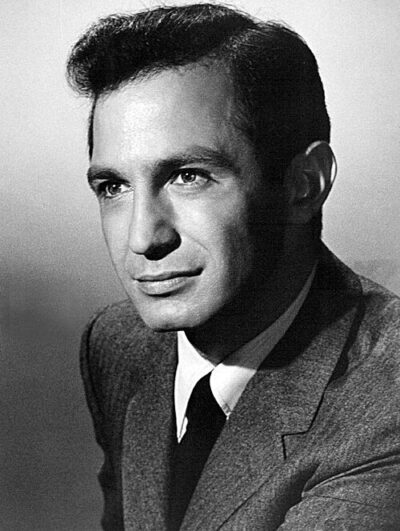
Ben Gazzara
Ben Gazzara was an American actor. Born August 28, 1930, in Manhattan. Died February 3, 2012, in New York City. Educated at The New School and Actors Studio. Awards include Donostia Award, Theatre World Award and Primetime Emmy Award for Outstanding Supporting Actor in a Miniseries or a Movie.
Facts
24 facts · 2 confirmed by two sources · 5 cited · 17 from one source
Where this comes from
Papalocal keeps its own record. It started from these sources; what each one said is kept here as it was copied, so a change on their side never changes this page by itself. Tap one to read its version.
What Wikidata says · copied November 13, 2026 · revision 2565610326
- Described as
- American actor (1930–2012)
- Other names
- Biagio Anthony Gazzarra, Carlo Biagio Anthony Gazzara, Biagio Anthony Gazzara
- Born
- August 28, 1930 · 6 references
- Died
- February 3, 2012 · 7 references
- Born in
- Manhattan · 2 references
- Died in
- New York City · 1 reference
- Cause of death
- pancreatic cancer · 1 reference
- Name at birth
- Biagio Anthony Gazzarra
- Citizen of
- United States
- Occupation
- director; character actor; screenwriter; television actor; stage actor; film actor; actor · 1 reference; television director · 1 reference
- Worked for
- The New School
- Education
- The New School; Actors Studio; Stuyvesant High School
- Awards
- Donostia Award (2005); Theatre World Award (1954) · 1 reference; Primetime Emmy Award for Outstanding Supporting Actor in a Miniseries or a Movie (2003)
- Spouse
- Janice Rule (1961–1979); Louise Erickson (1951–1957)
- Wikipedias with a page
- 52
Wikidata item Q296287 (wikidata.org/wiki/Q296287), public domain (CC0). Copied November 13, 2026.
What Wikipedia says · copied November 13, 2026 · revision 1383201910
Biagio Anthony "Ben" Gazzara (né Gazzarra; August 28, 1930 – February 3, 2012) was an American actor and director of film, stage, and television. He received numerous accolades including a Primetime Emmy Award and a Drama Desk Award, in addition to nominations for three Golden Globe Awards and three Tony Awards.
Born in New York City, Gazzara studied at The New School and began his professional career with the Actors Studio, of which he was a lifelong member. His breakthrough role was in the Broadway play Cat on a Hot Tin Roof (1955–56), which earned him widespread acclaim. A memorable performance as a soldier on trial for murder in Otto Preminger's Anatomy of a Murder (1959) transitioned Gazzara to an equally successful screen career. As the star of the television series Run for Your Life (1965–68), he was nominated for three Golden Globe Awards and two Emmy Awards. He won his only Emmy Award for the television film Hysterical Blindness (2002).
Gazzara was a recurring collaborator of John Cassavetes, working with him on Husbands (1970), The Killing of a Chinese Bookie (1976) and Opening Night (1977). His other best-known films include The Bridge at Remagen (1969), Capone (1975), Voyage of the Damned (1976), Saint Jack (1979), Road House (1989), The Spanish Prisoner (1997), The Big Lebowski, Buffalo '66, Happiness (all 1998), The Thomas Crown Affair, Summer of Sam (both 1999), Dogville (2003) and Paris, je t'aime (2006). He also had a successful and prolific film career in Europe, particularly Italy, where he worked with eminent directors including Giuseppe Tornatore, Giuliano Montaldo, Marco Ferreri, and Lars von Trier.
Gazzara was known for his gritty, naturalistic portrayals of intense, often amoral characters. According to The Hollywood Reporter, "Gazzara positioned himself for 'creative elbow room,' seeking edgy characters in non-mainstream productions or infusing mainstream productions with idiosyncratic supporting turns."
- Born, in its opening lines
- August 28, 1930
- Died, in its opening lines
- February 3, 2012
From the Wikipedia article “Ben Gazzara” (en.wikipedia.org/wiki/Ben_Gazzara), by its contributors, under CC BY-SA 4.0 (creativecommons.org/licenses/by-sa/4.0/). Copied November 13, 2026; not changed.
Confirmed Two sources agree. Cited One source, and it names where it got it. One source One source, without a reference of its own. Sources disagree The sources disagree. We show the best-supported value and keep theirs below.
