
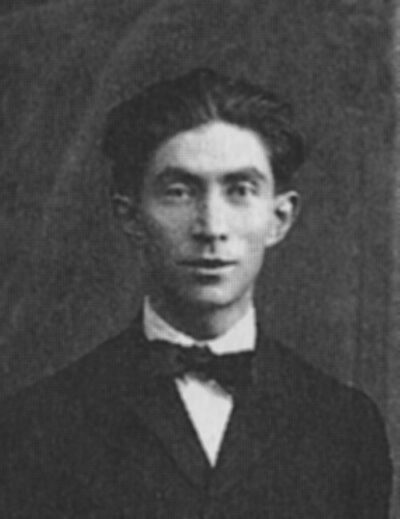
Benjamin Fondane
Benjamin Fondane was a Romanian-French writer. Born November 14, 1898, in Iași. Died October 2, 1944, in Auschwitz. Educated at Alexandru Ioan Cuza University. Awards include mort pour la France.
Facts
18 facts · 2 confirmed by two sources · 3 cited · 13 from one source
Where this comes from
Papalocal keeps its own record. It started from these sources; what each one said is kept here as it was copied, so a change on their side never changes this page by itself. Tap one to read its version.
What Wikidata says · copied November 17, 2026 · revision 2554547868
- Described as
- Romanian-French writer (1898–1944)
- Other names
- F. Benjamin, Diomed, Dio, Funfurpan, Isaac Laquedem, Const. Meletie, I. G. Ofir, Al. Vilara, Alex. Vilara, Von Doian, B. Fundoianu, Benjamin Wechsler
- Born
- November 14, 1898 · 4 references
- Died
- October 2, 1944 · 3 references
- Born in
- Iași
- Died in
- Auschwitz
- Citizen of
- France (1938–); Romania
- Occupation
- linguist; poet · 1 reference; librarian; film director · 1 reference; translator; philosopher · 2 references; essayist; playwright
- Education
- Alexandru Ioan Cuza University
- Awards
- mort pour la France
- Religion
- atheism · 1 reference
- Website
- http://fondane.net
- Wikipedias with a page
- 24
Wikidata item Q817484 (wikidata.org/wiki/Q817484), public domain (CC0). Copied November 17, 2026.
What Wikipedia says · copied November 17, 2026 · revision 1378530354
Benjamin Fondane (French: [bɛ̃ʒamɛ̃ fɔ̃dan]) or Benjamin Fundoianu (Romanian: [benʒaˈmin fundoˈjanu]; born Benjamin Wechsler, Wexler or Vecsler, first name also Beniamin or Barbu, usually abridged to B.; November 14, 1898 – October 2, 1944) was a Romanian and French poet, critic and existentialist philosopher, also noted for his work in film and theater. Known from his Romanian youth as a Symbolist poet and columnist, he alternated neoromantic and expressionist themes with echoes from Tudor Arghezi, and dedicated several poetic cycles to the rural life of his native Moldavia. Fondane, who was of Jewish Romanian extraction and a nephew of Jewish intellectuals Elias and Moses Schwartzfeld, participated in both minority secular Jewish culture and mainstream Romanian culture. During and after World War I, he was active as a cultural critic, avant-garde promoter and, with his brother-in-law Armand Pascal, manager of the theatrical troupe Insula.
Fondane began a second career in 1923, when he moved to Paris. Affiliated with Surrealism, but strongly opposed to its communist leanings, he moved on to become a figure in Jewish existentialism and a leading disciple of Lev Shestov. His critique of political dogma, rejection of rationalism, expectation of historical catastrophe and belief in the soteriological force of literature were outlined in his celebrated essays on Charles Baudelaire and Arthur Rimbaud, as well as in his final works of poetry. His literary and philosophical activities helped him build close relationships with other intellectuals: Shestov, Emil Cioran, David Gascoyne, Jacques Maritain, Victoria Ocampo, Ilarie Voronca etc. In parallel, Fondane also had a career in cinema: a film critic and a screenwriter for Paramount Pictures, he later worked on Rapt with Dimitri Kirsanoff, and directed the since-lost film Tararira in Argentina.
A prisoner of war during the fall of France, Fondane was released and spent the occupation years in clandestinity. He was eventually captured and handed to Nazi German authorities, who deported him to Auschwitz-Birkenau. He was sent to the gas chamber during the last wave of the Holocaust. His work was largely rediscovered later in the 20th century, when it became the subject of scholarly research and public curiosity in both France and Romania. In the latter country, this revival of interest also sparked a controversy over copyright issues.
- Born, in its opening lines
- November 14, 1898
- Died, in its opening lines
- October 2, 1944
From the Wikipedia article “Benjamin Fondane” (en.wikipedia.org/wiki/Benjamin_Fondane), by its contributors, under CC BY-SA 4.0 (creativecommons.org/licenses/by-sa/4.0/). Copied November 17, 2026; not changed.
Confirmed Two sources agree. Cited One source, and it names where it got it. One source One source, without a reference of its own. Sources disagree The sources disagree. We show the best-supported value and keep theirs below.
