
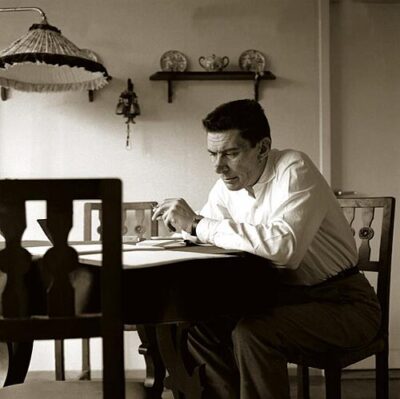
Beppe Fenoglio
Beppe Fenoglio was an Italian writer. Born March 1, 1922, in Alba. Died February 18, 1963, in Turin. Educated at University of Turin. Awards include honorary doctor of the University of Turin.
Facts
14 facts · 2 confirmed by two sources · 5 cited · 7 from one source
Where this comes from
Papalocal keeps its own record. It started from these sources; what each one said is kept here as it was copied, so a change on their side never changes this page by itself. Tap one to read its version.
What Wikidata says · copied November 18, 2026 · revision 2557809778
- Described as
- Italian writer (1922-1963)
- Other names
- Giuseppe Fenoglio
- Born
- March 1, 1922 · 4 references
- Died
- February 18, 1963 · 4 references
- Born in
- Alba · 1 reference
- Died in
- Turin · 1 reference
- Cause of death
- lung cancer
- Name at birth
- Giuseppe Fenoglio
- Citizen of
- Italy (1946–) · 1 reference; Kingdom of Italy (–1946)
- Occupation
- translator; writer · 1 reference; partisan · 1 reference
- Education
- University of Turin
- Awards
- honorary doctor of the University of Turin
- Lived in
- Alba (1922–1963)
- Wikipedias with a page
- 23
Wikidata item Q818632 (wikidata.org/wiki/Q818632), public domain (CC0). Copied November 18, 2026.
What Wikipedia says · copied November 18, 2026 · revision 1378410858
Giuseppe "Beppe" Fenoglio (Italian pronunciation: [ˈbɛppe feˈnɔʎʎo]; 1 March 1922 – 18 February 1963) was an Italian writer, partisan and translator from English. The works of Fenoglio have two main themes: the rural world of the Langhe, where he was born and raised, and the Italian resistance movement, both largely inspired by his own personal experiences in them; equally, the writer has two styles: the chronicle and the epos.
Fenoglio was drafted in 1943; before he completed officer school, Italy surrendered to the Allies and Germany attacked and occupied most of Italy. Like most of Italian Army, the training unit of Fenoglio collapsed; he adventurously travelled back home from Rome and spent months in hiding before joining the partisans in January 1944. After fighting till the end of the war, he translated a number of books from English and wrote the works he is known for while working for a winery in Alba. His first work was in the neorealist style: La paga del sabato (this was published posthumously too, in 1969). The novel was turned down by Elio Vittorini, who advised Fenoglio to carve out stories and then incorporate them into I ventitré giorni della città di Alba (The twenty-three days of the city of Alba, 1952).
These stories were a chronicle of the Italian partisans or of rural life. One such story was La malora (1954), a long story in the style of Giovanni Verga. His major works were published in a critical edition after his death; controversy remains about his novel Il partigiano Johnny (translated as Johnny the Partisan), first published in 1968, by some considered his best work, which was edited posthumously based on one or both of the two incomplete versions left unpublished. Fenoglio died in Turin, aged 40, of bronchial cancer.
- Born, in its opening lines
- March 1, 1922
- Died, in its opening lines
- February 18, 1963
From the Wikipedia article “Beppe Fenoglio” (en.wikipedia.org/wiki/Beppe_Fenoglio), by its contributors, under CC BY-SA 4.0 (creativecommons.org/licenses/by-sa/4.0/). Copied November 18, 2026; not changed.
Confirmed Two sources agree. Cited One source, and it names where it got it. One source One source, without a reference of its own. Sources disagree The sources disagree. We show the best-supported value and keep theirs below.
