
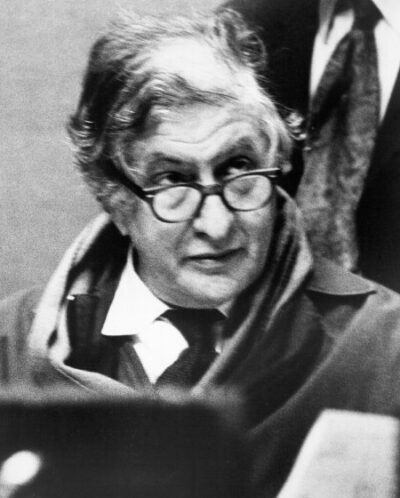
Bernard Herrmann
Bernard Herrmann was an American composer and conductor. Born June 29, 1911, in New York City. Died December 24, 1975, in Los Angeles. Known for Vertigo, Psycho and Citizen Kane. Educated at New York University and DeWitt Clinton High School. Awards include Academy Award for Best Original Dramatic Score, Grammy Awards and Arts and Letters Award in Music.
Facts
26 facts · 2 confirmed by two sources · 6 cited · 18 from one source
Where this comes from
Papalocal keeps its own record. It started from these sources; what each one said is kept here as it was copied, so a change on their side never changes this page by itself. Tap one to read its version.
What Wikidata says · copied November 13, 2026 · revision 2568773475
- Described as
- American composer and conductor (1911-1975)
- Other names
- Max Herman
- Born
- June 29, 1911 · 10 references
- Died
- December 24, 1975 · 10 references
- Born in
- New York City · 2 references
- Died in
- Los Angeles · 1 reference
- Buried in
- Beth David Cemetery
- Cause of death
- myocardial infarction
- Citizen of
- United States
- Occupation
- composer · 2 references; conductor · 1 reference; film score composer
- Education
- New York University; DeWitt Clinton High School
- Known for
- Vertigo; Psycho; Citizen Kane; The Day the Earth Stood Still; Taxi Driver; Wuthering Heights; The Devil and Daniel Webster
- Awards
- Academy Award for Best Original Dramatic Score (1942) · 1 reference; Grammy Awards; Arts and Letters Award in Music · 1 reference
- Field
- film score
- Spouse
- Lucille Fletcher
- Height
- 1.73 m (5 ft 8 in)
- Website
- http://thebernardherrmannestate.com
- Wikipedias with a page
- 45
Wikidata item Q296804 (wikidata.org/wiki/Q296804), public domain (CC0). Copied November 13, 2026.
What Wikipedia says · copied November 13, 2026 · revision 1381648896
Bernard Herrmann (born Maximillian Herman; June 29, 1911 – December 24, 1975) was an American composer and conductor best known for his work in film scoring. He is widely regarded as one of the greatest film composers of all time. Alex Ross writes that "Over four decades, he revolutionized movie scoring by abandoning the illustrative musical techniques that dominated Hollywood in the 1930s and imposing his own peculiar harmonic and rhythmic vocabulary." As a conductor, he championed the music of lesser-known composers.
As a young man, Herrmann was the chief conductor of the CBS Symphony Orchestra, which led him to become the composer for Orson Welles's radio series The Mercury Theatre on the Air. This led him to write his first film score, for Welles's directorial debut Citizen Kane (1941). That year, he won the Academy Award for Best Original Score for The Devil and Daniel Webster. He worked with Welles on The Magnificent Ambersons (1942) and Jane Eyre (1943). He worked with Alfred Hitchcock on nine films, including The Man Who Knew Too Much (1956, where he makes a cameo appearance at the Royal Albert Hall), Vertigo (1958), North by Northwest (1959), Psycho (1960), The Birds (1963, as "sound consultant") and Marnie (1964).
His other credits include Anna and the King of Siam (1946), The Ghost and Mrs. Muir (1947), The Day the Earth Stood Still (1951), Cape Fear (1962), Fahrenheit 451 (1966) and Twisted Nerve (1968). He composed the scores for several fantasy films featuring the work of animator Ray Harryhausen and composed for television, including Have Gun – Will Travel and Rod Serling's The Twilight Zone. Towards the end of his career, Herrmann scored the Hitchcock-inspired films François Truffaut's The Bride Wore Black (1968) and Brian De Palma's Sisters (1972) and Obsession (1976). His final score, recorded shortly before his death, was for Martin Scorsese's Taxi Driver (1976). His career is chronicled in Music for the Movies: Bernard Herrmann (1992).
- Born, in its opening lines
- June 29, 1911
- Died, in its opening lines
- December 24, 1975
From the Wikipedia article “Bernard Herrmann” (en.wikipedia.org/wiki/Bernard_Herrmann), by its contributors, under CC BY-SA 4.0 (creativecommons.org/licenses/by-sa/4.0/). Copied November 13, 2026; not changed.
Confirmed Two sources agree. Cited One source, and it names where it got it. One source One source, without a reference of its own. Sources disagree The sources disagree. We show the best-supported value and keep theirs below.
