
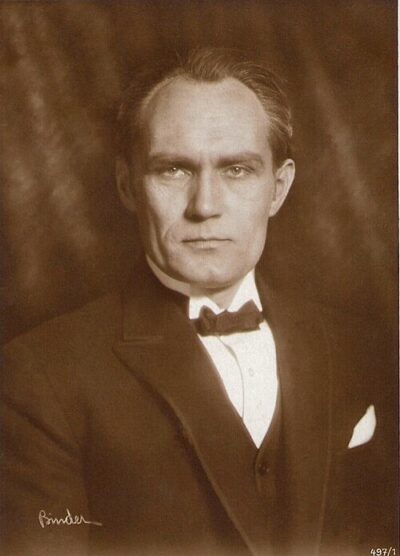
Bernhard Goetzke
Bernhard Goetzke was a German actor. Born June 5, 1884, in Gdańsk. Died October 7, 1964, in Berlin.
Facts
9 facts · 2 confirmed by two sources · 4 cited · 3 from one source
Where this comes from
Papalocal keeps its own record. It started from these sources; what each one said is kept here as it was copied, so a change on their side never changes this page by itself. Tap one to read its version.
What Wikidata says · copied November 18, 2026 · revision 2569171853
- Described as
- German actor (1884-1964)
- Born
- June 5, 1884 · 4 references
- Died
- October 7, 1964 · 4 references
- Born in
- Gdańsk · 1 reference
- Died in
- Berlin · 1 reference
- Buried in
- Friedhof Ruhleben · 1 reference
- Citizen of
- Germany
- Occupation
- actor · 1 reference; stage actor; film actor
- Wikipedias with a page
- 21
Wikidata item Q66861 (wikidata.org/wiki/Q66861), public domain (CC0). Copied November 18, 2026.
What Wikipedia says · copied November 18, 2026 · revision 1376087171
Bernhard Goetzke (5 June 1884 – 7 October 1964) was a German stage and film actor, renowned for his contributions to German silent cinema. Born in Danzig, German Empire (now Gdańsk, Poland), Goetzke began his acting career in theaters across Hagen, Düsseldorf, Dresden, and Berlin. His film debut came in 1917 with Robert Wiene's Furcht (Fear), but his breakthrough roles were in Fritz Lang's films, including Destiny (Der Müde Tod, 1921), Dr. Mabuse the Gambler (1922), and Die Nibelungen (1924). His restrained yet expressive acting style made him a favourite among filmmakers.
- Born, in its opening lines
- June 5, 1884
- Died, in its opening lines
- October 7, 1964
From the Wikipedia article “Bernhard Goetzke” (en.wikipedia.org/wiki/Bernhard_Goetzke), by its contributors, under CC BY-SA 4.0 (creativecommons.org/licenses/by-sa/4.0/). Copied November 18, 2026; not changed.
Confirmed Two sources agree. Cited One source, and it names where it got it. One source One source, without a reference of its own. Sources disagree The sources disagree. We show the best-supported value and keep theirs below.
