
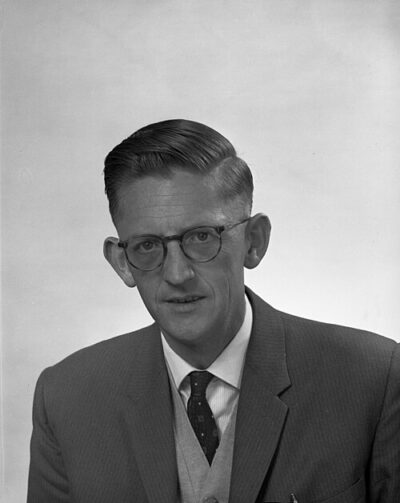
Bill Neilson
William Arthur Neilson served as Premier of Tasmania from 1975 to 1977. Born in 1925, Neilson's career spanned public service and politics. Before entering politics, he worked as a mail carrier and also contributed as a theatre critic. He remained active in public life until his death in 1989.
Facts
12 facts · 2 confirmed by two sources · 1 cited · 9 from one source
Where this comes from
Papalocal keeps its own record. It started from these sources; what each one said is kept here as it was copied, so a change on their side never changes this page by itself. Tap one to read its version.
What Wikidata says · copied November 13, 2026 · revision 2431068518
- Described as
- Australian politician; Premier of Tasmania (1925-1989)
- Other names
- William Arthur Neilson
- Born
- August 27, 1925
- Died
- November 9, 1989
- Born in
- Hobart
- Died in
- Hobart
- Citizen of
- Australia
- Occupation
- politician; mail carrier; theatre critic
- Positions held
- Premier of Tasmania (1975–1977); Member of the Tasmanian House of Assembly (1946–1977)
- Political party
- Australian Labor Party
- Awards
- Companion of the Order of Australia (1978) · 1 reference
- Wikipedias with a page
- 4
Wikidata item Q4910321 (wikidata.org/wiki/Q4910321), public domain (CC0). Copied November 13, 2026.
What Wikipedia says · copied November 13, 2026 · revision 1347054536
William Arthur Neilson AC (27 August 1925 – 9 November 1989) was Premier of Tasmania from 1975 to 1977.
Born in Hobart, and educated at Ogilvie High School, Neilson became a postman before entering politics. He married Jill Benjamin, daughter of Phyllis Benjamin, in Melbourne in 1949. They had one son Andrew and three daughters, Christine, Carol and Robin.
- Born, in its opening lines
- August 27, 1925
- Died, in its opening lines
- November 9, 1989
From the Wikipedia article “Bill Neilson” (en.wikipedia.org/wiki/Bill_Neilson), by its contributors, under CC BY-SA 4.0 (creativecommons.org/licenses/by-sa/4.0/). Copied November 13, 2026; not changed.
Confirmed Two sources agree. Cited One source, and it names where it got it. One source One source, without a reference of its own. Sources disagree The sources disagree. We show the best-supported value and keep theirs below.
