
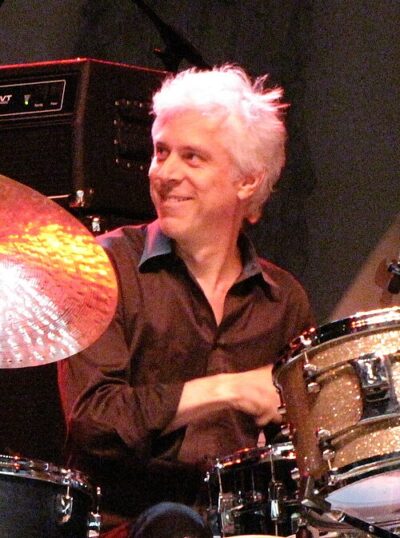
Bill Rieflin
Bill Rieflin was an American musician. Born September 30, 1960, in Seattle. Died March 24, 2020, in Seattle.
Facts
16 facts · 2 confirmed by two sources · 2 cited · 12 from one source
Where this comes from
Papalocal keeps its own record. It started from these sources; what each one said is kept here as it was copied, so a change on their side never changes this page by itself. Tap one to read its version.
What Wikidata says · copied November 18, 2026 · revision 2530366425
- Described as
- American musician (1960–2020)
- Other names
- William Frederick Rieflin
- Born
- September 30, 1960 · 3 references
- Died
- March 24, 2020
- Born in
- Seattle
- Died in
- Seattle
- Cause of death
- cancer · 2 references
- Citizen of
- United States
- Occupation
- percussionist; singer; guitarist · 1 reference
- Member of
- Ministry · 1 reference; The Humans
- Genre
- industrial rock
- Instrument
- drum kit; voice
- Record label
- Discipline Global Mobile; First World Music · 1 reference
- Wikipedias with a page
- 15
Wikidata item Q2517349 (wikidata.org/wiki/Q2517349), public domain (CC0). Copied November 18, 2026.
What Wikipedia says · copied November 18, 2026 · revision 1384037569
William Frederick Rieflin (September 30, 1960 – March 24, 2020) was an American musician. Rieflin came to prominence in the 1990s mainly for his work as a drummer with groups (particularly in the industrial rock and industrial metal scenes) such as Ministry, the Revolting Cocks, Lard, KMFDM, Pigface, Swans, Chris Connelly, and Nine Inch Nails. He worked regularly with R.E.M. following the retirement of Bill Berry in 1997. He was a member of King Crimson from 2013 until his death in 2020.
- Born, in its opening lines
- September 30, 1960
- Died, in its opening lines
- March 24, 2020
From the Wikipedia article “Bill Rieflin” (en.wikipedia.org/wiki/Bill_Rieflin), by its contributors, under CC BY-SA 4.0 (creativecommons.org/licenses/by-sa/4.0/). Copied November 18, 2026; not changed.
Confirmed Two sources agree. Cited One source, and it names where it got it. One source One source, without a reference of its own. Sources disagree The sources disagree. We show the best-supported value and keep theirs below.
