
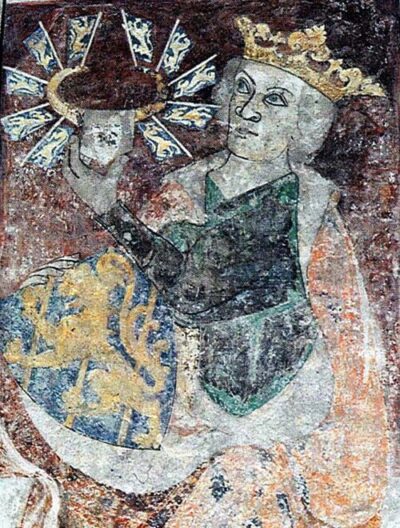
Birger, King of Sweden was a King of Sweden. Born 1280, in Sweden. Died May 31, 1321, in Denmark. Positions held include Monarch of Sweden (1290–1319).
Facts
17 facts · 0 confirmed by two sources · 3 cited · 14 from one source
Where this comes from
Papalocal keeps its own record. It started from these sources; what each one said is kept here as it was copied, so a change on their side never changes this page by itself. Tap one to read its version.
What Wikidata says · copied November 16, 2026 · revision 2557815638
- Described as
- King of Sweden
- Born
- 1280 · 9 references
- Died
- May 31, 1321 · 4 references
- Born in
- Sweden · 1 reference
- Died in
- Denmark
- Buried in
- St. Bendt's Church
- Citizen of
- Sweden
- Positions held
- Monarch of Sweden (1290–1319) · 1 reference
- Spouse
- Martha of Denmark (1298–) · 1 reference
- Children
- Magnus Birgersson · 1 reference; Erik Birgersson d.y.; Agnes Birgersdotter
- Father
- Magnus III of Sweden
- Mother
- Hedwig of Holstein
- Siblings
- Ingeborg Magnusdotter of Sweden; Eric Magnusson; Valdemar; Rikissa Magnusdotter of Sweden
- Wikipedias with a page
- 31
Wikidata item Q434782 (wikidata.org/wiki/Q434782), public domain (CC0). Copied November 16, 2026.
What Wikipedia says · copied November 16, 2026 · revision 1372528417
Birger Magnusson (c. 1280 – after 31 May 1321) was King of Sweden from 1290 until his deposition in 1318. He was the son of King Magnus Ladulås and Helvig of Holstein, and was crowned during his father's lifetime. He married Märta Eriksdotter, daughter of King Eric V Klipping of Denmark.
Birger's reign was dominated by conflict with his younger brothers, Dukes Erik and Valdemar Magnusson, who sought greater influence within the kingdom. In 1306, the dukes seized and imprisoned Birger during the Håtuna games, although he later regained his freedom and royal authority. In 1317, Birger retaliated by capturing his brothers at the Nyköping Banquet, after which they died in captivity. Their deaths provoked a widespread rebellion, and Birger was deposed and forced to flee to Denmark in 1318. He remained there in exile until his death. His eldest son, Magnus, was captured by his father's opponents and executed in 1320.
From the Wikipedia article “Birger, King of Sweden” (en.wikipedia.org/wiki/Birger,_King_of_Sweden), by its contributors, under CC BY-SA 4.0 (creativecommons.org/licenses/by-sa/4.0/). Copied November 16, 2026; not changed.
Confirmed Two sources agree. Cited One source, and it names where it got it. One source One source, without a reference of its own. Sources disagree The sources disagree. We show the best-supported value and keep theirs below.
