
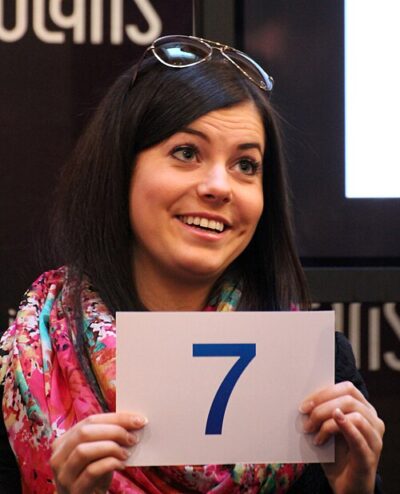
Birgit Sarrap
Birgit Sarrap is an Estonian singer. Born September 24, 1988, in Kohila. Educated at Tallinn University.
Facts
15 facts · 1 confirmed by two sources · 1 cited · 13 from one source
Where this comes from
Papalocal keeps its own record. It started from these sources; what each one said is kept here as it was copied, so a change on their side never changes this page by itself. Tap one to read its version.
What Wikidata says · copied November 16, 2026 · revision 2536810026
- Described as
- Estonian singer (born 1988)
- Other names
- Birgit Õigemeel
- Born
- September 24, 1988 · 2 references
- Born in
- Kohila · 1 reference
- Name at birth
- Birgit Õigemeel
- Citizen of
- Estonia
- Occupation
- singer; actor · 1 reference; recording artist
- Education
- Tallinn University
- Genre
- pop music
- Instrument
- guitar; voice
- Record label
- MTH Publishing (2007–2010); Enjoy Entertainment (2012–)
- Spouse
- Indrek Sarrap (2015–)
- Website
- https://birgit.ee
- Wikipedias with a page
- 64
Wikidata item Q433003 (wikidata.org/wiki/Q433003), public domain (CC0). Copied November 16, 2026.
What Wikipedia says · copied November 16, 2026 · revision 1371022227
Birgit Sarrap (née Õigemeel; born 24 September 1988), also known mononymously as Birgit, is an Estonian singer. She rose to prominence in 2007 after winning the first season of Eesti otsib superstaari, the Estonian version of Idol. Her debut self-titled studio album was later released in 2008. Birgit has gone on to release four other studio albums in her career.
Birgit represented Estonia in the Eurovision Song Contest 2013 with the song "Et uus saaks alguse" after winning Eesti Laul 2013. She qualified for the grand final, where she placed 20th.
- Born, in its opening lines
- September 24, 1988
From the Wikipedia article “Birgit Sarrap” (en.wikipedia.org/wiki/Birgit_Sarrap), by its contributors, under CC BY-SA 4.0 (creativecommons.org/licenses/by-sa/4.0/). Copied November 16, 2026; not changed.
Confirmed Two sources agree. Cited One source, and it names where it got it. One source One source, without a reference of its own. Sources disagree The sources disagree. We show the best-supported value and keep theirs below.
