
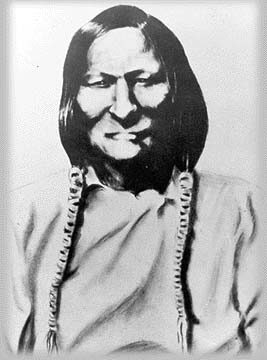
Black Kettle was an American indigenous leader. Born 1803, in Black Hills. Died November 27, 1868.
Facts
5 facts · 2 confirmed by two sources · 0 cited · 3 from one source
Where this comes from
Papalocal keeps its own record. It started from these sources; what each one said is kept here as it was copied, so a change on their side never changes this page by itself. Tap one to read its version.
What Wikidata says · copied November 18, 2026 · revision 2557819706
- Described as
- American indigenous leader
- Other names
- Mo'ôhtávetoo'o, Moketavato
- Born
- 1803 · 2 references
- Died
- November 27, 1868 · 1 reference
- Born in
- Black Hills
- Citizen of
- United States
- Occupation
- traditional leader or chief
- Wikipedias with a page
- 17
Wikidata item Q739669 (wikidata.org/wiki/Q739669), public domain (CC0). Copied November 18, 2026.
What Wikipedia says · copied November 18, 2026 · revision 1365850820
Black Kettle (Cheyenne: Mo'ohtavetoo'o) (c. 1803 – November 27, 1868) was a leader of the Southern Cheyenne during the American Indian Wars. Born to the Northern Só'taeo'o / Só'taétaneo'o band of the Northern Cheyenne in the Black Hills of present-day South Dakota, he later married into the Wotápio / Wutapai band (one mixed Cheyenne-Kiowa band with Lakota Sioux origin) of the Southern Cheyenne.
Black Kettle is often remembered as a peacemaker who accepted treaties with the U.S. government to protect his people. On November 27, 1868, while attempting to escape the Battle of Washita River with his wife, he was shot and killed by soldiers of the U.S. 7th Cavalry.
- Born, in its opening lines
- c. 1803
- Died, in its opening lines
- November 27, 1868
From the Wikipedia article “Black Kettle” (en.wikipedia.org/wiki/Black_Kettle), by its contributors, under CC BY-SA 4.0 (creativecommons.org/licenses/by-sa/4.0/). Copied November 18, 2026; not changed.
Confirmed Two sources agree. Cited One source, and it names where it got it. One source One source, without a reference of its own. Sources disagree The sources disagree. We show the best-supported value and keep theirs below.
