
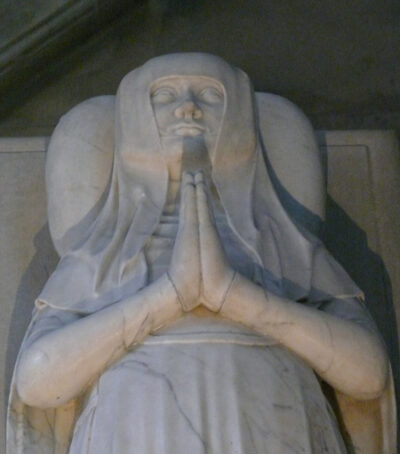
Blanche of France, Duchess of Orléans
Blanche of France, Duchess of Orléans was a French princess. Born April 1, 1328, in Châteauneuf-sur-Loire. Died February 8, 1393, in Vincennes.
Facts
11 facts · 2 confirmed by two sources · 0 cited · 9 from one source
Where this comes from
Papalocal keeps its own record. It started from these sources; what each one said is kept here as it was copied, so a change on their side never changes this page by itself. Tap one to read its version.
What Wikidata says · copied November 18, 2026 · revision 2557271594
- Described as
- French princess
- Other names
- Blanche of France
- Born
- April 1, 1328
- Died
- February 8, 1393
- Born in
- Châteauneuf-sur-Loire
- Died in
- Vincennes
- Buried in
- Basilica of Saint-Denis
- Citizen of
- Kingdom of France
- Occupation
- aristocrat
- Spouse
- Philip of Valois, Duke of Orléans (1344–) · 1 reference
- Father
- Charles IV of France
- Mother
- Jeanne d'Évreux
- Siblings
- Marie of France
- Wikipedias with a page
- 21
Wikidata item Q2669924 (wikidata.org/wiki/Q2669924), public domain (CC0). Copied November 18, 2026.
What Wikipedia says · copied November 18, 2026 · revision 1358513986
Blanche of France (1 April 1328 – 8 February 1393) was the posthumous daughter of King Charles IV of France and his third wife, Joan of Évreux (the daughter of Louis, Count of Évreux and Margaret of Artois). She was the last direct Capetian and the last-surviving member of her family, and her marriage to her second cousin, Philip, Duke of Orléans, proved childless. With Blanche's death in 1393, the House of Capet continued to exist only via its numerous cadet branches.
- Born, in its opening lines
- April 1, 1328
- Died, in its opening lines
- February 8, 1393
From the Wikipedia article “Blanche of France, Duchess of Orléans” (en.wikipedia.org/wiki/Blanche_of_France,_Duchess_of_Orléans), by its contributors, under CC BY-SA 4.0 (creativecommons.org/licenses/by-sa/4.0/). Copied November 18, 2026; not changed.
Confirmed Two sources agree. Cited One source, and it names where it got it. One source One source, without a reference of its own. Sources disagree The sources disagree. We show the best-supported value and keep theirs below.
