
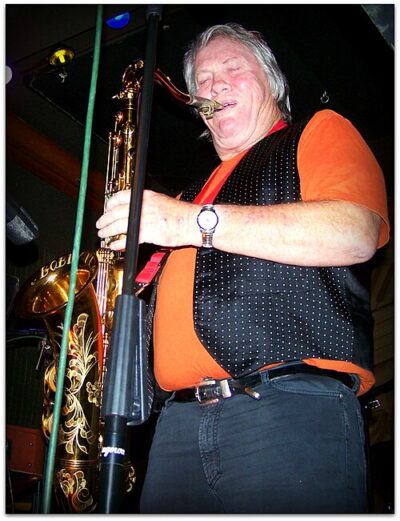
Bobby Keys
Bobby Keys was an American saxophonist. Born December 18, 1943, in Slaton. Died December 2, 2014, in Franklin. Educated at Lubbock High School.
Facts
14 facts · 2 confirmed by two sources · 4 cited · 8 from one source
Where this comes from
Papalocal keeps its own record. It started from these sources; what each one said is kept here as it was copied, so a change on their side never changes this page by itself. Tap one to read its version.
What Wikidata says · copied November 16, 2026 · revision 2567006675
- Described as
- American saxophonist (1943-2014)
- Other names
- Robert Henry Keys
- Born
- December 18, 1943 · 3 references
- Died
- December 2, 2014 · 3 references
- Born in
- Slaton
- Died in
- Franklin · 1 reference
- Cause of death
- liver cirrhosis
- Citizen of
- United States
- Occupation
- musician · 1 reference; saxophonist · 1 reference; animator · 1 reference
- Education
- Lubbock High School · 1 reference
- Member of
- X-Pensive Winos
- Genre
- rock music
- Instrument
- saxophone
- Nickname
- Bobby Keys
- Wikipedias with a page
- 20
Wikidata item Q888591 (wikidata.org/wiki/Q888591), public domain (CC0). Copied November 16, 2026.
What Wikipedia says · copied November 16, 2026 · revision 1357827137
Robert Henry Keys (December 18, 1943 – December 2, 2014) was an American saxophonist who performed as a member of several horn sections of the 1970s. He appears on albums by the Rolling Stones, Lynyrd Skynyrd, Harry Nilsson, Delaney & Bonnie and Friends, George Harrison, John Lennon, Ringo Starr, Eric Clapton, Joe Cocker, Joe Ely, and other prominent musicians. Keys played on hundreds of recordings, and was a touring musician from 1956 until his death in 2014.
- Born, in its opening lines
- December 18, 1943
- Died, in its opening lines
- December 2, 2014
From the Wikipedia article “Bobby Keys” (en.wikipedia.org/wiki/Bobby_Keys), by its contributors, under CC BY-SA 4.0 (creativecommons.org/licenses/by-sa/4.0/). Copied November 16, 2026; not changed.
Confirmed Two sources agree. Cited One source, and it names where it got it. One source One source, without a reference of its own. Sources disagree The sources disagree. We show the best-supported value and keep theirs below.
