
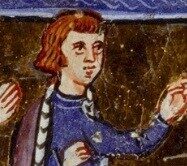
Bohemond III of Antioch
Bohemond III of Antioch was a Prince of Antioch. Born 1144. Died 1201. Positions held include prince of Antioch.
Facts
27 facts · 1 confirmed by two sources · 2 cited · 24 from one source
Where this comes from
Papalocal keeps its own record. It started from these sources; what each one said is kept here as it was copied, so a change on their side never changes this page by itself. Tap one to read its version.
What Wikidata says · copied November 16, 2026 · revision 2564548749
- Described as
- Prince of Antioch
- Other names
- Bohemundo III el Tartamudo
- Born
- 1144 · 1 reference; 1144 · 1 reference
- Died
- 1201 · 2 references
- Buried in
- Basilica of Saint-Denis
- Occupation
- monarch
- Positions held
- prince of Antioch
- Spouse
- Orgueilleuse de Harenc (1169–1175); Theodora Komnene, Princess of Antioch (1177–1180); Sibylla (1181–1194); Isabel (1195)
- Children
- Raymond IV · 1 reference; Bohemond IV of Antioch; Constance of Antioch; Philippa of Antioch; Manuel of Antioch; Alix of Antioch; Guillaume of Antioch; Bohemund van Botroun; Eschiva of Antioch
- Father
- Raymond of Poitiers
- Mother
- Constance of Antioch
- Siblings
- Philippa of Antioch; Maria of Antioch; Agnes of Antioch; Jeanne of Antioch; Baldwin of Antioch; Raimond of Antioch
- Religion
- Catholicism
- Wikipedias with a page
- 31
Wikidata item Q349062 (wikidata.org/wiki/Q349062), public domain (CC0). Copied November 16, 2026.
What Wikipedia says · copied November 16, 2026 · revision 1382246615
Bohemond III, also known as Bohemond the Child or the Stammerer (French: Bohémond le Bambe/le Baube; c. 1148–1201), was Prince of Antioch from 1163 to 1201. He ascended to the throne after the Antiochene noblemen dethroned his mother, Constance. He fell into captivity in the Battle of Harim in 1164, but the victorious Nur al-Din Zengi, atabeg (governor) of Aleppo released him to avoid coming into conflict with the Byzantine Empire. Bohemond went to Constantinople to pay homage to Manuel I Komnenos, who persuaded him to install a Greek Orthodox patriarch in Antioch. The Latin patriarch of Antioch, Aimery of Limoges, placed Antioch under interdict. Bohemond restored Aimery only after the Greek patriarch died during an earthquake in 1170.
Bohemond remained a close ally of the Byzantine Empire. He fought against the new lord of Armenian Cilicia, Mleh, assisting in the restoration of Byzantine rule in the Cilician plain. He also made alliances with the Muslim rulers of Aleppo and Damascus against Saladin, who had begun to unite the Muslim countries along the borders of the crusader states. Since Bohemond repudiated his second wife and married an Antiochene lady, Patriarch Aimery excommunicated him in 1180.
Bohemond forced the Armenian rulers of Cilicia to accept his suzerainty in the late 1180s. He also secured the County of Tripoli for his second son, Bohemond, in 1187. However, Saladin occupied almost the whole Principality of Antioch in the summer of 1188. To preserve the peace with Saladin, Bohemond did not provide military assistance to the crusaders during the Third Crusade. The expansionist policy of King Leo I of Armenia in the 1190s gave rise to a lasting conflict between Antioch and Cilicia. Bohemond was captured in 1194 by Leo, who tried to seize Antioch, but the burghers formed the Commune of Antioch and expelled the Armenian soldiers from the town. Bohemond was released only after he acknowledged Leo's independence.
New conflicts emerged after Bohemond's eldest son, Raymond, died in 1197. Raymond's widow, who was Leo's niece, gave birth to a posthumous son, Raymond-Roupen, but Bohemond's younger son, Bohemond of Tripoli, wanted to secure his succession in Antioch with the assistance of the commune. Bohemond III seems to have supported his son during his last years. The War of the Antiochene Succession began with Bohemond's death and lasted until 1219.
- Born, in its opening lines
- 1148
- Died, in its opening lines
- 1201
From the Wikipedia article “Bohemond III of Antioch” (en.wikipedia.org/wiki/Bohemond_III_of_Antioch), by its contributors, under CC BY-SA 4.0 (creativecommons.org/licenses/by-sa/4.0/). Copied November 16, 2026; not changed.
Confirmed Two sources agree. Cited One source, and it names where it got it. One source One source, without a reference of its own. Sources disagree The sources disagree. We show the best-supported value and keep theirs below.
