
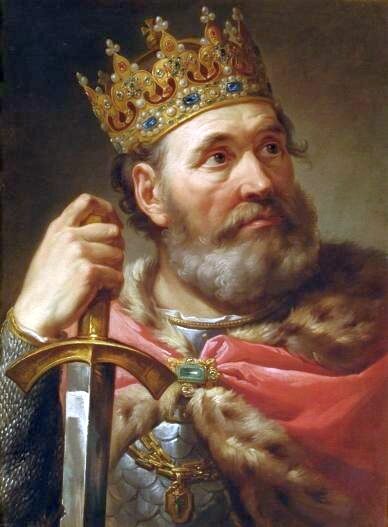
Bolesław I the Brave
Bolesław I the Brave was a first King of Poland. Born 967, in Poznań. Died June 17, 1025, in Gniezno. Positions held include King of Poland (1025) and Duke of Bohemia (1003–1004).
Facts
30 facts · 2 confirmed by two sources · 3 cited · 25 from one source
Where this comes from
Papalocal keeps its own record. It started from these sources; what each one said is kept here as it was copied, so a change on their side never changes this page by itself. Tap one to read its version.
What Wikidata says · copied November 16, 2026 · revision 2568894501
- Described as
- first King of Poland (967–1025)
- Other names
- Boleslaus I, Boleslaus
- Born
- 967 · 2 references
- Died
- June 17, 1025 · 2 references
- Born in
- Poznań · 1 reference
- Died in
- Gniezno · 1 reference
- Buried in
- Archcathedral Basilica of St. Peter and St. Paul
- Citizen of
- Duchy of Poland
- Occupation
- politician
- Positions held
- King of Poland (1025); Duke of Bohemia (1003–1004)
- Spouse
- Judith of Hungary; Emnilda of Lusatia · 1 reference; Oda of Meissen; Henilda von Meissen; Tyra of Denmark; Hodica
- Children
- Bezprym; Regelinda; Mieszko II; Otto Bolesławowic; Matylda; unknown daughter · 1 reference; N.N. córka Bolesława Chrobrego
- Father
- Mieszko I
- Mother
- Doubravka of Bohemia
- Siblings
- Gunhild of Wenden; Sigrid the Haughty; Lambert Mieszkowic; Mieszko Mieszkowic; Świętopełk Mieszkowic; Gunzelin, Margrave of Meissen · 1 reference
- Wikipedias with a page
- 68
Wikidata item Q53436 (wikidata.org/wiki/Q53436), public domain (CC0). Copied November 16, 2026.
What Wikipedia says · copied November 16, 2026 · revision 1385630284
Bolesław I the Brave (c. 967 – 17 June 1025), less often known as Bolesław the Great, was Duke of Poland from 992 to 1025 and the first King of Poland in 1025. He was also Duke of Bohemia between 1003 and 1004 as Boleslaus IV. A member of the Piast dynasty, Bolesław was a capable monarch and a strong mediator in Central European affairs. He continued to proselytise Western Christianity among his subjects and raised Poland to the rank of a kingdom, thus becoming the first Polish ruler to hold the title of rex, Latin for King.
The son of Mieszko I by his first wife Doubravka of Bohemia, Bolesław ruled Lesser Poland already during the final years of Mieszko's reign. When the country became divided in 992, he banished his father's widow, Oda of Haldensleben and his half-brothers, purged their adherents, and successfully reunified Poland by 995. As a devout Christian, Bolesław supported the missionary endeavours of Adalbert of Prague and Bruno of Querfurt. The martyrdom of Adalbert in 997 and Bolesław's successful attempt to ransom the bishop's remains, paying for their weight in gold, consolidated Poland's autonomy from the Holy Roman Empire.
At the Congress of Gniezno (11 March 1000), Emperor Otto III permitted the establishment of a Polish church structure with a metropolitan see at Gniezno, independent from the Archbishopric of Magdeburg. Bishoprics were also established in Kraków, Wrocław, and Kołobrzeg, and Bolesław formally repudiated paying tribute to the Empire. Following Otto's death in 1002, Bolesław fought a series of wars against Otto's cousin and heir, Henry II, ending in the Peace of Bautzen (1018). In the summer of 1018, in one of his expeditions, Bolesław I captured Kiev, where he installed his son-in-law Sviatopolk I as ruler. According to legend, Bolesław chipped his blade when striking Kiev's Golden Gate. In honour of this legend, the Szczerbiec ("Jagged Sword") would later become the coronation sword of Polish kings.
Bolesław is widely considered one of Poland's most accomplished Piast monarchs; he was an able strategist and statesman, who transformed Poland into an entity comparable to a hereditary monarchy. Bolesław conducted successful military campaigns to the west, south and east of his realm, and conquered territories in modern-day Slovakia, Moravia, Red Ruthenia, Meissen, Lusatia, and Bohemia. He established the "Prince's Law" and sponsored the construction of churches, monasteries, military forts as well as waterway infrastructure. He also introduced the first Polish monetary unit, the grzywna, divided into 240 denarii, and minted his own coinage.
- Born, in its opening lines
- c. 967
- Died, in its opening lines
- June 17, 1025
From the Wikipedia article “Bolesław I the Brave” (en.wikipedia.org/wiki/Bolesław_I_the_Brave), by its contributors, under CC BY-SA 4.0 (creativecommons.org/licenses/by-sa/4.0/). Copied November 16, 2026; not changed.
Confirmed Two sources agree. Cited One source, and it names where it got it. One source One source, without a reference of its own. Sources disagree The sources disagree. We show the best-supported value and keep theirs below.
