
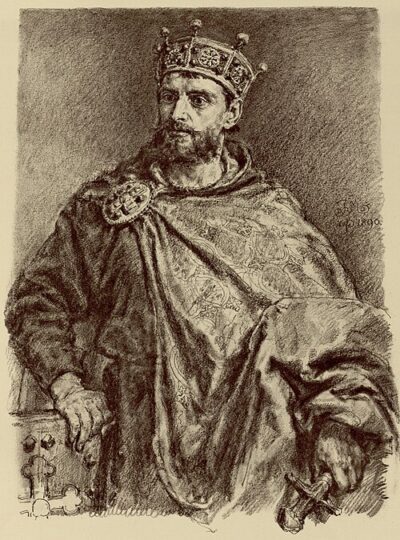
Bolesław II the Generous was a King of Poland. Born 1042, in Kingdom of Poland. Died April 3, 1081, in Ossiach. Positions held include King of Poland (1076–1079).
Facts
14 facts · 0 confirmed by two sources · 5 cited · 9 from one source
Where this comes from
Papalocal keeps its own record. It started from these sources; what each one said is kept here as it was copied, so a change on their side never changes this page by itself. Tap one to read its version.
What Wikidata says · copied November 16, 2026 · revision 2568894533
- Described as
- King of Poland
- Other names
- Boleslaw II, King of Poland
- Born
- 1042 · 3 references
- Died
- April 3, 1081 · 1 reference
- Born in
- Kingdom of Poland
- Died in
- Ossiach
- Citizen of
- Poland
- Occupation
- warrior
- Positions held
- King of Poland (1076–1079)
- Spouse
- Wyszesława of Kyiv
- Children
- Mieszko Bolesławowic · 1 reference
- Father
- Casimir I the Restorer · 1 reference
- Mother
- Maria Dobroniega of Kiev · 1 reference
- Siblings
- Świętosława of Poland; Władysław I Herman; Mieszko Kazimierzowic
- Wikipedias with a page
- 39
Wikidata item Q53440 (wikidata.org/wiki/Q53440), public domain (CC0). Copied November 16, 2026.
What Wikipedia says · copied November 16, 2026 · revision 1368748650
Bolesław II the Bold (Polish: Bolesław II Śmiały; c. 1042 – 2 or 3 April 1081 or 1082), also known as the Generous (Szczodry ), was Duke of Poland from 1058 to 1076 and King of Poland from 1076 to 1079. He was the eldest son of Duke Casimir I the Restorer and Maria Dobroniega of Kiev.
Bolesław II is considered to have been one of the most capable of the Piast rulers. In 1075, he re-established the Archdiocese of Gniezno (consecrated in 1064) and founded the Diocese of Płock. He established Benedictine monasteries in Mogilno, Lubin and Wrocław. Bolesław II was also the first Polish monarch to produce his own coinage in quantity great enough to replace the foreign coins prevalent in the country during the reigns of the first Piast kings. He established royal mints in Kraków and Wrocław and reformed the coinage, which brought considerable revenue into the royal coffers. All these efforts had an enormous influence on the economic and cultural development of the country.
According to the chronicler Gallus Anonymus, during his reign, he was called largus ("the Generous" in English, Szczodry in Polish) as he founded many churches and monasteries throughout Poland. The nickname "the Bold" (Śmiały) was only given to Bolesław II for the first time in the later Chronicle of the Polish kings, although it was considered by historiography of the 19th and 20th centuries as a contemporary nickname.
From the Wikipedia article “Bolesław II the Bold” (en.wikipedia.org/wiki/Bolesław_II_the_Bold), by its contributors, under CC BY-SA 4.0 (creativecommons.org/licenses/by-sa/4.0/). Copied November 16, 2026; not changed.
Confirmed Two sources agree. Cited One source, and it names where it got it. One source One source, without a reference of its own. Sources disagree The sources disagree. We show the best-supported value and keep theirs below.
