
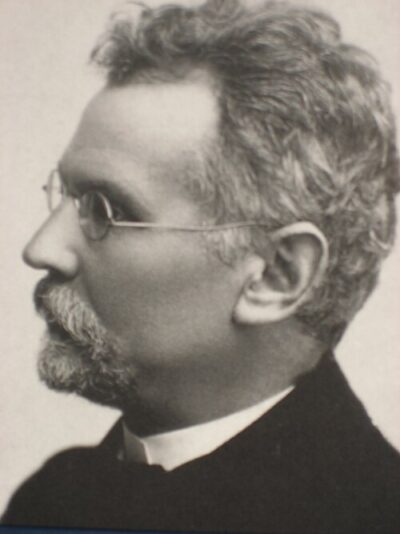
Bolesław Prus
Bolesław Prus was a Polish novelist. Born August 20, 1847, in Hrubieszów. Died May 19, 1912, in Warsaw. Known for The Doll. Educated at University of Warsaw. Awards include Cross of Independence with Swords.
Facts
22 facts · 2 confirmed by two sources · 3 cited · 17 from one source
Where this comes from
Papalocal keeps its own record. It started from these sources; what each one said is kept here as it was copied, so a change on their side never changes this page by itself. Tap one to read its version.
What Wikidata says · copied November 16, 2026 · revision 2557821169
- Described as
- Polish novelist (1847–1912)
- Other names
- Boleslaw Prus, Aleksander Głowacki
- Born
- August 20, 1847 · 6 references
- Died
- May 19, 1912 · 7 references
- Born in
- Hrubieszów · 1 reference
- Died in
- Warsaw · 3 references
- Buried in
- Powązki Cemetery
- Cause of death
- myocardial infarction
- Name at birth
- Aleksander Głowacki
- Citizen of
- Poland; Russian Empire
- Occupation
- journalist; philosopher; writer · 1 reference; literary critic; prose writer; short story writer; novelist; opinion journalist · 1 reference
- Education
- University of Warsaw
- Known for
- The Doll
- Awards
- Cross of Independence with Swords · 1 reference
- Field
- fiction · 1 reference
- Siblings
- Leon Głowacki
- Wikipedias with a page
- 62
Wikidata item Q144439 (wikidata.org/wiki/Q144439), public domain (CC0). Copied November 16, 2026.
What Wikipedia says · copied November 16, 2026 · revision 1385855574
Aleksander Głowacki (20 August 1847 – 19 May 1912), better known by his pen name Bolesław Prus (Polish: [bɔˈlεswaf ˈprus] ), was a Polish journalist, novelist, a leading figure in the history of Polish literature and philosophy, and a distinctive voice in world literature.
Aged 15, Aleksander Głowacki joined the Polish 1863 Uprising against Imperial Russia. Shortly after his 16th birthday, he suffered severe battle injuries. Five months later, he was imprisoned. These early experiences may have precipitated the panic disorder and agoraphobia that dogged him through life, and shaped his opposition to seeking Poland's independence by force of arms.
In 1872, in Warsaw, aged 25, he settled into a 40-year journalistic career that focused on science, technology, education, and economic and cultural development – societal enterprises essential to the perseverance of a people who in the 18th century had been partitioned out of political existence by Russia, Prussia, and Austria. Głowacki took the pen name for his popular writings, "Prus", from the appellation of his family's coat-of-arms.
As a sideline, he wrote short stories. Achieving success, he proceeded to a larger canvas: between 1884 and 1895, he completed four major novels: The Outpost, The Doll, The New Woman, and Pharaoh. The Doll depicts the romantic infatuation of a man of action who is frustrated by his country's backwardness. Pharaoh, his only historical novel, is a study of politics, set in ancient Egypt at the fall of its 20th Dynasty and New Kingdom.
- Born, in its opening lines
- August 20, 1847
- Died, in its opening lines
- May 19, 1912
From the Wikipedia article “Bolesław Prus” (en.wikipedia.org/wiki/Bolesław_Prus), by its contributors, under CC BY-SA 4.0 (creativecommons.org/licenses/by-sa/4.0/). Copied November 16, 2026; not changed.
Confirmed Two sources agree. Cited One source, and it names where it got it. One source One source, without a reference of its own. Sources disagree The sources disagree. We show the best-supported value and keep theirs below.
