
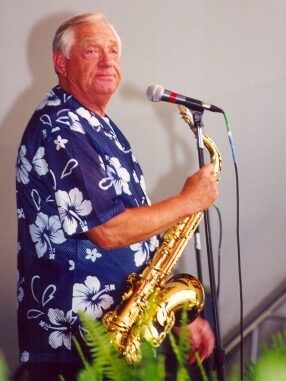
Boots Randolph
Boots Randolph was an American musician. Born June 3, 1927, in Paducah. Died July 3, 2007, in Nashville.
Facts
14 facts · 2 confirmed by two sources · 4 cited · 8 from one source
Where this comes from
Papalocal keeps its own record. It started from these sources; what each one said is kept here as it was copied, so a change on their side never changes this page by itself. Tap one to read its version.
What Wikidata says · copied November 16, 2026 · revision 2567003474
- Described as
- American musician (1927–2007)
- Born
- June 3, 1927 · 4 references
- Died
- July 3, 2007 · 4 references
- Born in
- Paducah · 1 reference
- Died in
- Nashville · 1 reference
- Buried in
- Nashville City Cemetery · 1 reference
- Cause of death
- cerebral hemorrhage
- Citizen of
- United States
- Occupation
- musician · 1 reference; saxophonist
- Genre
- pop music
- Instrument
- saxophone
- Record label
- RCA Records; Capitol Records
- Website
- http://www.bootsrandolph.com/
- Wikipedias with a page
- 21
Wikidata item Q781767 (wikidata.org/wiki/Q781767), public domain (CC0). Copied November 16, 2026.
What Wikipedia says · copied November 16, 2026 · revision 1380491435
Homer Louis "Boots" Randolph III (June 3, 1927 – July 3, 2007) was an American musician. His 1963 saxophone hit "Yakety Sax" became the signature tune of The Benny Hill Show. Randolph was a prolific session musician and member of the Nashville A-Team, performing on numerous recordings by artists including Chet Atkins, Elvis Presley, Roy Orbison, Brenda Lee, REO Speedwagon, and Al Hirt. He performed alongside artists in pop, rock, jazz, and country music.
- Born, in its opening lines
- June 3, 1927
- Died, in its opening lines
- July 3, 2007
From the Wikipedia article “Boots Randolph” (en.wikipedia.org/wiki/Boots_Randolph), by its contributors, under CC BY-SA 4.0 (creativecommons.org/licenses/by-sa/4.0/). Copied November 16, 2026; not changed.
Confirmed Two sources agree. Cited One source, and it names where it got it. One source One source, without a reference of its own. Sources disagree The sources disagree. We show the best-supported value and keep theirs below.
