
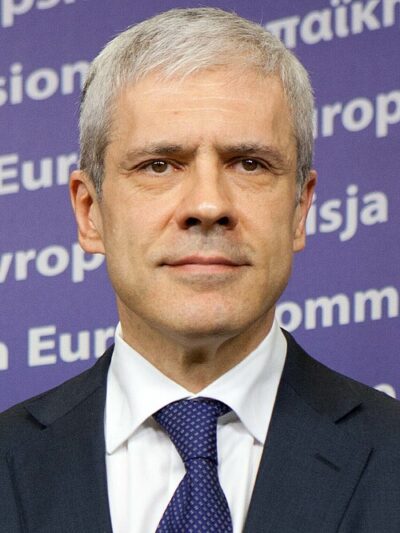
Boris Tadić
Boris Tadić is the 3rd President of the Republic of Serbia. Born January 15, 1958, in Sarajevo. Positions held include President of Serbia (2004–2012). Educated at University of Belgrade Faculty of Philosophy and First Belgrade Gymnasium. Awards include North–South Prize, Steiger Award and Jubilee Medal "65 Years of Victory in the Great Patriotic War 1941–1945".
Facts
25 facts · 1 confirmed by two sources · 6 cited · 18 from one source
Where this comes from
Papalocal keeps its own record. It started from these sources; what each one said is kept here as it was copied, so a change on their side never changes this page by itself. Tap one to read its version.
What Wikidata says · copied November 16, 2026 · revision 2563060764
- Described as
- 3rd President of the Republic of Serbia
- Born
- January 15, 1958 · 3 references
- Born in
- Sarajevo · 1 reference
- Citizen of
- Serbia; Socialist Federal Republic of Yugoslavia; Federal Republic of Yugoslavia; Serbia and Montenegro
- Occupation
- politician · 1 reference; psychologist · 1 reference
- Positions held
- President of Serbia (2004–2012)
- Political party
- Democratic Party; Social Democratic Party
- Education
- University of Belgrade Faculty of Philosophy; First Belgrade Gymnasium; University of Belgrade
- Awards
- North–South Prize (2011) · 2 references; Steiger Award (2010) · 1 reference; Jubilee Medal "65 Years of Victory in the Great Patriotic War 1941–1945" (2010); Quadriga (2008); Order of the Republika Srpska (2012) · 1 reference; European Medal of Tolerance
- Spouse
- Tatjana Tadić
- Father
- Ljubomir Tadić
- Mother
- Nevenka Tadić
- Religion
- Eastern Orthodoxy
- Lived in
- Sarajevo (1958–1961)
- Wikipedias with a page
- 76
Wikidata item Q483290 (wikidata.org/wiki/Q483290), public domain (CC0). Copied November 16, 2026.
What Wikipedia says · copied November 16, 2026 · revision 1383666106
Boris Tadić (born 15 January 1958) is a Serbian politician who served as president of Serbia from 2004 to 2012. He led the Democratic Party (DS) from 2004 to 2012 as well, and previously served as minister of defence from 2003 to 2004.
Born in Sarajevo, he graduated from the University of Belgrade with a degree in psychology. He later worked as a journalist, military psychologist, and teacher at the First Belgrade Gymnasium. Tadić joined DS in 1990 and was elected to the National Assembly after the 1993 election. After the downfall of Slobodan Milošević in 2000, he was appointed as the minister of telecommunications in the government of the Federal Republic of Yugoslavia, a role which he held until 2003, after which he was appointed minister of defence in the government of Serbia. Tadić was elected president of DS a year after the assassination of Zoran Đinđić after previously serving as a member of its provisional leadership. He stood as a candidate for DS in the 2004 presidential elections, which he won after beating Tomislav Nikolić of the Serbian Radical Party in the second round.
During his first mandate, he advocated cooperation and reconciliation of the former Yugoslav countries, became the first Serbian head of state or head of government to visit the Srebrenica Genocide Memorial, and launched an initiative for the Serbian parliament to adopt a resolution condemning the Srebrenica massacre. He successfully ran for re-election in 2008 after again beating Nikolić in the second round. During his second mandate, DS formed a coalition government with the Socialist Party of Serbia, its former opponent, which signed the Stabilisation and Association Agreement (SAA), while the EU abolished visas for Serbian citizens travelling to Schengen Area countries and Serbia received EU candidate status. Additionally, Serbia also completed its obligations to the International Criminal Tribunal for the former Yugoslavia (ICTY). The period during his second mandate was also characterised by the challenges of the 2008 Kosovo declaration of independence and the 2008 financial crisis, leading to low rates of economic growth.
After being pressured by protests that were organised by Nikolić's Serbian Progressive Party in 2011, Tadić announced that snap elections will be held in 2012. He lost in the second round to Nikolić, who succeeded him as president of Serbia. Tadić was replaced by Dragan Đilas as the president of DS in November 2012, after which Tadić unsuccessfully sought to become the party's president again in 2014. He then left DS and formed the New Democratic Party, later renamed to Social Democratic Party, which remained a parliamentary party up to the 2020 election, which it boycotted. A self-described liberal, he is an advocate of closer ties with the European Union (EU), supports the accession of Serbia to the European Union, and is widely regarded as pro-Western-orientated, while favouring balanced relations with Russia, China, United States, and the European Union.
- Born, in its opening lines
- January 15, 1958
From the Wikipedia article “Boris Tadić” (en.wikipedia.org/wiki/Boris_Tadić), by its contributors, under CC BY-SA 4.0 (creativecommons.org/licenses/by-sa/4.0/). Copied November 16, 2026; not changed.
Confirmed Two sources agree. Cited One source, and it names where it got it. One source One source, without a reference of its own. Sources disagree The sources disagree. We show the best-supported value and keep theirs below.
