
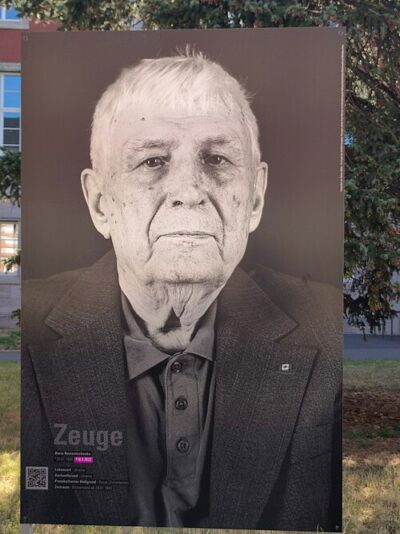
Borys Romanchenko
Borys Romanchenko was a Survivor of Nazi concentration camps who was killed during the 2022 Russian invasion of Ukraine. Born January 20, 1926, in Bondari. Died March 18, 2022, in Kharkiv. Educated at Kharkiv National University of Radioelectronics.
Facts
10 facts · 2 confirmed by two sources · 2 cited · 6 from one source
Where this comes from
Papalocal keeps its own record. It started from these sources; what each one said is kept here as it was copied, so a change on their side never changes this page by itself. Tap one to read its version.
What Wikidata says · copied November 18, 2026 · revision 2524703565
- Described as
- Survivor of Nazi concentration camps who was killed during the 2022 Russian invasion of Ukraine
- Other names
- Boris Tymofiyovych Romantschenko, Boris Romanchenko, Borys Tymofiyovych Romanchenko
- Born
- January 20, 1926 · 1 reference
- Died
- March 18, 2022 · 1 reference
- Born in
- Bondari · 1 reference
- Died in
- Kharkiv · 1 reference
- Cause of death
- conflagration
- Citizen of
- Soviet Union; Ukraine
- Occupation
- public figure · 1 reference
- Education
- Kharkiv National University of Radioelectronics (–1959)
- Lived in
- Saltivka
- Wikipedias with a page
- 22
Wikidata item Q111317677 (wikidata.org/wiki/Q111317677), public domain (CC0). Copied November 18, 2026.
What Wikipedia says · copied November 18, 2026 · revision 1366788666
Borys Tymofiyovych Romanchenko (Ukrainian: Борис Тимофійович Романченко; 20 January 1926 – 18 March 2022) was a Ukrainian public figure, activist and a survivor of several Nazi concentration camps: Buchenwald, Dora and Bergen-Belsen. He was killed by Russian airstrikes during the Battle of Kharkiv during the 2022 Russian invasion of Ukraine.
- Born, in its opening lines
- January 20, 1926
- Died, in its opening lines
- March 18, 2022
From the Wikipedia article “Borys Romanchenko” (en.wikipedia.org/wiki/Borys_Romanchenko), by its contributors, under CC BY-SA 4.0 (creativecommons.org/licenses/by-sa/4.0/). Copied November 18, 2026; not changed.
Confirmed Two sources agree. Cited One source, and it names where it got it. One source One source, without a reference of its own. Sources disagree The sources disagree. We show the best-supported value and keep theirs below.
