
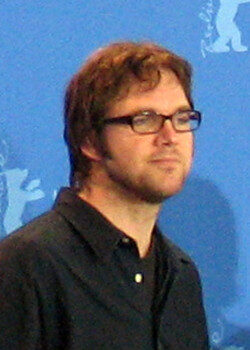
Brad Anderson
Brad Anderson is an American film director. Born April 5, 1964, in Madison. Educated at Bowdoin College and London Film School. Awards include Sitges Film Festival Best Director award.
Facts
13 facts · 1 confirmed by two sources · 2 cited · 10 from one source
Where this comes from
Papalocal keeps its own record. It started from these sources; what each one said is kept here as it was copied, so a change on their side never changes this page by itself. Tap one to read its version.
What Wikidata says · copied November 16, 2026 · revision 2549153867
- Described as
- American film director
- Born
- April 5, 1964 · 2 references
- Born in
- Madison
- Citizen of
- United States
- Occupation
- film director; screenwriter · 1 reference; film editor; executive producer; television director; director · 1 reference
- Education
- Bowdoin College; London Film School
- Awards
- Sitges Film Festival Best Director award (2001)
- Website
- https://www.bradandersonfilms.com/
- Wikipedias with a page
- 22
Wikidata item Q598238 (wikidata.org/wiki/Q598238), public domain (CC0). Copied November 16, 2026.
What Wikipedia says · copied November 16, 2026 · revision 1378075388
Brad Anderson (born April 5, 1964) is an American film director, producer and writer. A director of thriller and horror films and television projects, he is best known for directing The Machinist (2004), starring Christian Bale, psychological horror film Session 9 (2001) and The Call (2013), starring Halle Berry. He also produced and directed several episodes of the Fox science fiction series Fringe. Earlier in his career he directed the romantic comedies Next Stop Wonderland (1998) and Happy Accidents (2000).
- Born, in its opening lines
- April 5, 1964
From the Wikipedia article “Brad Anderson (director)” (en.wikipedia.org/wiki/Brad_Anderson_(director)), by its contributors, under CC BY-SA 4.0 (creativecommons.org/licenses/by-sa/4.0/). Copied November 16, 2026; not changed.
Confirmed Two sources agree. Cited One source, and it names where it got it. One source One source, without a reference of its own. Sources disagree The sources disagree. We show the best-supported value and keep theirs below.
