
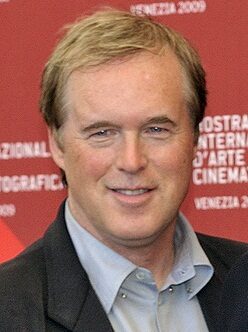
Brad Bird
Brad Bird is an American film director, animator, screenwriter and producer. Born September 24, 1957, in Kalispell. Known for National Supers Agency, Frozone and Jack-Jack Parr. Educated at California Institute of the Arts and Corvallis High School. Awards include Annie Award, Academy Award for Best Animated Feature (2 times) and Hugo Award for Best Dramatic Presentation, Long Form.
Facts
28 facts · 1 confirmed by two sources · 11 cited · 16 from one source
Where this comes from
Papalocal keeps its own record. It started from these sources; what each one said is kept here as it was copied, so a change on their side never changes this page by itself. Tap one to read its version.
What Wikidata says · copied November 13, 2026 · revision 2567179512
- Described as
- American film director, animator, screenwriter and producer (born 1957)
- Other names
- Phillip Bradley Bird, Bradley Bird
- Born
- September 24, 1957 · 2 references
- Born in
- Kalispell · 1 reference
- Name at birth
- Phillip Bradley Bird
- Citizen of
- United States · 1 reference
- Occupation
- screenwriter · 2 references; film director; film producer; actor; animator; voice actor; director · 2 references
- Worked for
- Walt Disney Studios · 1 reference; Pixar (2000–) · 1 reference
- Education
- California Institute of the Arts · 1 reference; Corvallis High School · 1 reference
- Known for
- National Supers Agency; Frozone; Jack-Jack Parr; Omnidroid; The Underminer
- Awards
- Annie Award; Academy Award for Best Animated Feature (2 times) (2005, 2008) · 1 reference; Hugo Award for Best Dramatic Presentation, Long Form (2005)
- Children
- Nicholas Bird · 1 reference; Michael Bird
- Lived in
- Corvallis · 1 reference; Tiburon; Los Feliz
- Wikipedias with a page
- 42
Wikidata item Q310960 (wikidata.org/wiki/Q310960), public domain (CC0). Copied November 13, 2026.
What Wikipedia says · copied November 13, 2026 · revision 1385343381
Philip Bradley Bird (born September 24, 1957) is an American filmmaker, animator, and voice actor. The recipient of two Academy Awards, two BAFTA Awards and ten Annie Awards, he developed an interest in the art of animation early on, and completed his first short subject by age 14. Bird sent the film to Walt Disney Productions, leading to an apprenticeship from the studio's Nine Old Men. He attended the California Institute of the Arts in the late 1970s, and worked for Disney shortly thereafter.
In the 1980s, Bird worked in film development with various studios. He co-wrote Batteries Not Included (1987), and developed two episodes of Amazing Stories for Steven Spielberg, including its spin-off (based on a segment written by Bird for the show), the widely panned animated sitcom Family Dog. Afterwards, Bird joined the animated sitcom The Simpsons as creative consultant for eight seasons. He directed the animated film The Iron Giant (1999); though acclaimed, it was a box-office bomb.
Bird moved to Pixar where he wrote and directed two successful animated films, The Incredibles (2004) and Ratatouille (2007). They earned Bird two Academy Awards for Best Animated Feature wins and Best Original Screenplay nominations. He transitioned to live-action filmmaking with similarly successful Mission: Impossible – Ghost Protocol (2011), he then directed Disney's Tomorrowland (2015). He returned to Pixar to develop Incredibles 2 (2018), which became the second-highest-grossing animated film of all time during its theatrical run, and earned him another nomination for the Academy Award.
Bird has a reputation for supervising his projects to a high degree of detail. He advocates for creative freedom and the possibilities of animation, and has criticized its stereotype as children's entertainment, or classification as a genre, rather than an art.
- Born, in its opening lines
- September 24, 1957
From the Wikipedia article “Brad Bird” (en.wikipedia.org/wiki/Brad_Bird), by its contributors, under CC BY-SA 4.0 (creativecommons.org/licenses/by-sa/4.0/). Copied November 13, 2026; not changed.
Confirmed Two sources agree. Cited One source, and it names where it got it. One source One source, without a reference of its own. Sources disagree The sources disagree. We show the best-supported value and keep theirs below.
