
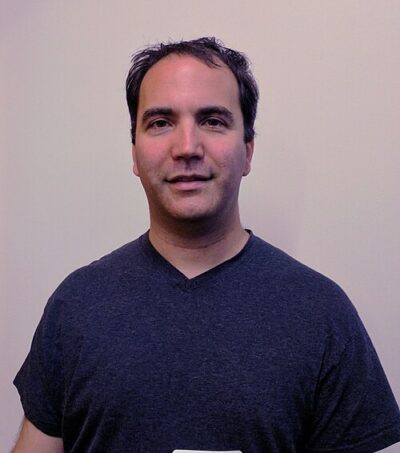
Bram Cohen
Bram Cohen is an American programmer, creator of BitTorrent protocol. Born October 12, 1975, in New York City. Known for BitTorrent. Educated at University at Buffalo and Stuyvesant High School.
Facts
14 facts · 1 confirmed by two sources · 0 cited · 13 from one source
Where this comes from
Papalocal keeps its own record. It started from these sources; what each one said is kept here as it was copied, so a change on their side never changes this page by itself. Tap one to read its version.
What Wikidata says · copied November 15, 2026 · revision 2534162479
- Described as
- American programmer, creator of BitTorrent protocol
- Born
- October 12, 1975
- Born in
- New York City
- Citizen of
- United States
- Occupation
- computer scientist; programmer; blogger; businessperson · 1 reference; mathematician · 1 reference
- Education
- University at Buffalo; Stuyvesant High School
- Known for
- BitTorrent
- Field
- software engineering
- Lived in
- San Francisco Bay Area
- Website
- https://bramcohen.com
- Wikipedias with a page
- 33
Wikidata item Q318489 (wikidata.org/wiki/Q318489), public domain (CC0). Copied November 15, 2026.
What Wikipedia says · copied November 15, 2026 · revision 1383299893
Bram Cohen (born October 12, 1975) is an American computer programmer, best known as the author of the peer-to-peer (P2P) BitTorrent protocol in 2001, as well as the first file sharing program to use the protocol, also known as BitTorrent. He is also the co-founder of CodeCon and organizer of the San Francisco Bay Area P2P-hackers meeting, was the co-author of Codeville and creator of the Chia cryptocurrency which implements the proof of space-time consensus algorithm.
- Born, in its opening lines
- October 12, 1975
From the Wikipedia article “Bram Cohen” (en.wikipedia.org/wiki/Bram_Cohen), by its contributors, under CC BY-SA 4.0 (creativecommons.org/licenses/by-sa/4.0/). Copied November 15, 2026; not changed.
Confirmed Two sources agree. Cited One source, and it names where it got it. One source One source, without a reference of its own. Sources disagree The sources disagree. We show the best-supported value and keep theirs below.
