
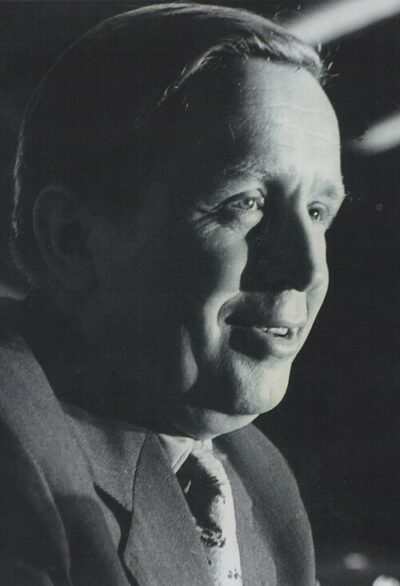
Branko Ćopić
Branko Ćopić was a Yugoslav writer. Born January 1, 1915, in Hašani, Krupa na Uni. Died March 26, 1984, in Belgrade. Educated at University of Belgrade Faculty of Philosophy and University of Belgrade. Awards include NIN Prize, Order of the Yugoslav flag with ribbon and Order of Brotherhood and Unity.
Facts
29 facts · 2 confirmed by two sources · 10 cited · 17 from one source
Where this comes from
Papalocal keeps its own record. It started from these sources; what each one said is kept here as it was copied, so a change on their side never changes this page by itself. Tap one to read its version.
What Wikidata says · copied November 16, 2026 · revision 2557822291
- Described as
- Yugoslav writer (1915–1984)
- Other names
- Branko Copic
- Born
- January 1, 1915 · 6 references
- Died
- March 26, 1984 · 5 references
- Born in
- Hašani, Krupa na Uni
- Died in
- Belgrade · 2 references
- Buried in
- Belgrade New Cemetery
- Cause of death
- falling
- Citizen of
- Austria–Hungary; Kingdom of Serbs, Croats and Slovenes; Kingdom of Yugoslavia; Socialist Federal Republic of Yugoslavia
- Occupation
- writer · 2 references; poet; children's writer; playwright · 1 reference; screenwriter · 1 reference
- Education
- University of Belgrade Faculty of Philosophy (–1940); University of Belgrade
- Member of
- Serbian Academy of Sciences and Arts (1965–1984); Academy of Sciences and Arts of Bosnia and Herzegovina (–1984) · 2 references
- Awards
- NIN Prize (1958) · 1 reference; Order of the Yugoslav flag with ribbon; Order of Brotherhood and Unity; Order "For Merit to the People" with golden star; Order "For Merit to the People" with silver rays; Commemorative Medal of the Partisans of 1941
- Field
- literature · 1 reference; poetry · 1 reference; drama · 1 reference; film · 1 reference
- Wikipedias with a page
- 28
Wikidata item Q472164 (wikidata.org/wiki/Q472164), public domain (CC0). Copied November 16, 2026.
What Wikipedia says · copied November 16, 2026 · revision 1381887468
Branko Ćopić (Serbian Cyrillic: Бранко Ћопић, pronounced [brǎːnkɔ t͡ɕɔ̂pit͡ɕ]; 1 January 1915 – 26 March 1984) was a Yugoslav and Serbian writer. He wrote poetry, short stories, and novels, and became famous for his stories for children and young adults, often set during World War II in revolutionary Yugoslavia, written with characteristic humor in the form of ridicule, satire, and irony.
As a professional writer, Ćopić was very popular and was able to sell large numbers of copies. This allowed him to live solely from his writings, which was rare for novelists in Yugoslavia at the time. However, the quality of his writings brought him inclusion into primary school curricula, which meant that some of his stories found their way into textbooks, and some novels became compulsory reading.
In the early 1950s, he also wrote satirical stories, criticizing social and political anomalies and personalities from the country's political life of the time, for which he was considered a dissident and "heretic", and had to explain himself to the party hierarchy.
- Born, in its opening lines
- January 1, 1915
- Died, in its opening lines
- March 26, 1984
From the Wikipedia article “Branko Ćopić” (en.wikipedia.org/wiki/Branko_Ćopić), by its contributors, under CC BY-SA 4.0 (creativecommons.org/licenses/by-sa/4.0/). Copied November 16, 2026; not changed.
Confirmed Two sources agree. Cited One source, and it names where it got it. One source One source, without a reference of its own. Sources disagree The sources disagree. We show the best-supported value and keep theirs below.
