
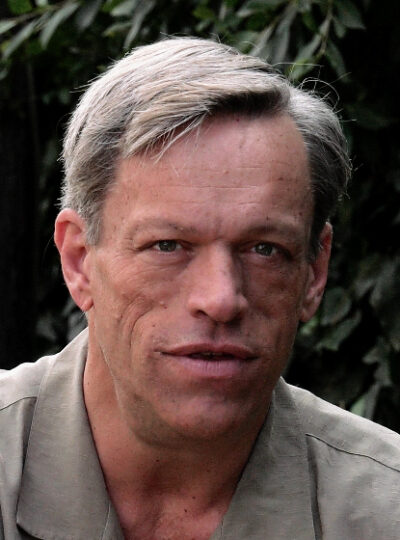
Brian Thompson
Brian Thompson is an American actor. Born August 28, 1959, in Ellensburg. Educated at Mark Morris High School and Central Washington University.
Facts
9 facts · 1 confirmed by two sources · 1 cited · 7 from one source
Where this comes from
Papalocal keeps its own record. It started from these sources; what each one said is kept here as it was copied, so a change on their side never changes this page by itself. Tap one to read its version.
What Wikidata says · copied November 15, 2026 · revision 2560472109
- Described as
- American actor
- Other names
- Brian Earl Thompson
- Born
- August 28, 1959 · 1 reference
- Born in
- Ellensburg
- Citizen of
- United States
- Occupation
- actor · 1 reference; television actor; film actor
- Education
- Mark Morris High School · 1 reference; Central Washington University
- Website
- https://brianthompson.com
- Wikipedias with a page
- 31
Wikidata item Q82330 (wikidata.org/wiki/Q82330), public domain (CC0). Copied November 15, 2026.
What Wikipedia says · copied November 15, 2026 · revision 1385523706
Brian Earl Thompson (born August 28, 1959) is an American actor. His career began with a small role in the 1984 film The Terminator. He played the villainous "Night Slasher" in the 1986 film Cobra. His first named role was on Werewolf, a horror series that ran during Fox's inaugural broadcasting year of 1987–1988. Thompson has played several characters in the Star Trek franchise—the most notable being the Klingon Lieutenant Klag, who informed Commander William Riker that "Gagh is always best when served live", the Alien Bounty Hunter on The X-Files, and Eddie Fiori on Kindred: The Embraced. In 2014, he produced, wrote and starred in the B movie parody The Extendables.
- Born, in its opening lines
- August 28, 1959
From the Wikipedia article “Brian Thompson (actor)” (en.wikipedia.org/wiki/Brian_Thompson_(actor)), by its contributors, under CC BY-SA 4.0 (creativecommons.org/licenses/by-sa/4.0/). Copied November 15, 2026; not changed.
Confirmed Two sources agree. Cited One source, and it names where it got it. One source One source, without a reference of its own. Sources disagree The sources disagree. We show the best-supported value and keep theirs below.
