
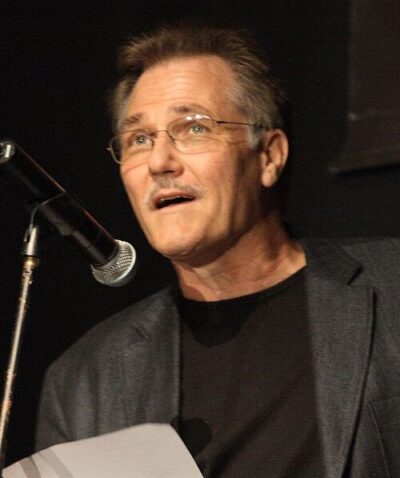
Brian Yuzna
Brian Yuzna is an American film maker. Born August 30, 1949, in Manila. Awards include Time Machine Award.
Facts
9 facts · 1 confirmed by two sources · 4 cited · 4 from one source
Where this comes from
Papalocal keeps its own record. It started from these sources; what each one said is kept here as it was copied, so a change on their side never changes this page by itself. Tap one to read its version.
What Wikidata says · copied November 16, 2026 · revision 2567042253
- Described as
- American film maker
- Born
- August 30, 1949 · 2 references
- Born in
- Manila · 1 reference
- Citizen of
- United States; Philippines
- Occupation
- film director · 1 reference; film producer · 1 reference; screenwriter · 1 reference; actor
- Awards
- Time Machine Award (2003)
- Wikipedias with a page
- 22
Wikidata item Q913284 (wikidata.org/wiki/Q913284), public domain (CC0). Copied November 16, 2026.
What Wikipedia says · copied November 16, 2026 · revision 1370234757
Brian Yuzna (born August 30, 1949) is an American film producer, director, and writer. He is best known for his work in the science fiction and horror film genres. Yuzna began his career as a producer for several films by director Stuart Gordon, such as Re-Animator (1985) and From Beyond (1986), before making his directorial debut with the satirical body horror film Society (1989).
He also served as a co-writer for the comedy Honey, I Shrunk the Kids (1989). Yuzna was the first American filmmaker to adapt a manga, Bio Booster Armor Guyver, into a live-action feature, The Guyver (1991). He has directed several adaptations of the work of H. P. Lovecraft, and has assisted many first time directors, including Stuart Gordon, Christophe Gans, and Luis De La Madrid, in getting their projects made.
- Born, in its opening lines
- August 30, 1949
From the Wikipedia article “Brian Yuzna” (en.wikipedia.org/wiki/Brian_Yuzna), by its contributors, under CC BY-SA 4.0 (creativecommons.org/licenses/by-sa/4.0/). Copied November 16, 2026; not changed.
Confirmed Two sources agree. Cited One source, and it names where it got it. One source One source, without a reference of its own. Sources disagree The sources disagree. We show the best-supported value and keep theirs below.
