
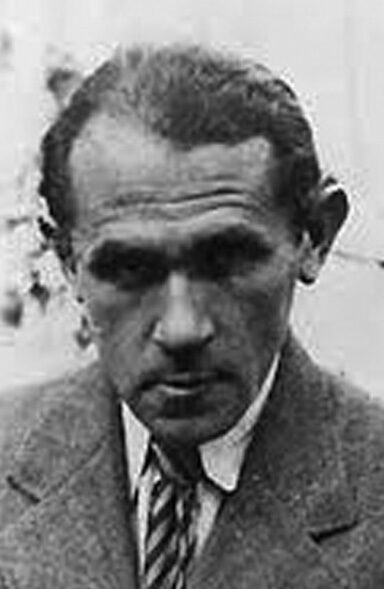
Bruno Schulz
Bruno Schulz was a Jewish novelist and painter. Born July 12, 1892, in Drohobych. Died November 19, 1942, in Drohobych Ghetto. Known for Sanatorium Under the Sign of the Hourglass and The Street of Crocodiles. Educated at Lviv University. Awards include Golden Laurel of the Polish Academy of Literature.
Facts
20 facts · 2 confirmed by two sources · 7 cited · 11 from one source
Where this comes from
Papalocal keeps its own record. It started from these sources; what each one said is kept here as it was copied, so a change on their side never changes this page by itself. Tap one to read its version.
What Wikidata says · copied November 16, 2026 · revision 2557824192
- Described as
- Jewish novelist and painter (1892-1942)
- Born
- July 12, 1892 · 11 references
- Died
- November 19, 1942 · 9 references
- Born in
- Drohobych · 2 references
- Died in
- Drohobych Ghetto
- Citizen of
- Austria–Hungary; West Ukrainian People's Republic; Ukrainian People's Republic; Second Polish Republic
- Occupation
- writer · 2 references; painter · 1 reference; literary critic · 1 reference; draftsperson · 1 reference; graphic artist · 1 reference
- Education
- Lviv University
- Known for
- Sanatorium Under the Sign of the Hourglass; The Street of Crocodiles
- Awards
- Golden Laurel of the Polish Academy of Literature
- Field
- literature · 1 reference; erotic art · 1 reference; femdom art
- Wikipedias with a page
- 57
Wikidata item Q148886 (wikidata.org/wiki/Q148886), public domain (CC0). Copied November 16, 2026.
What Wikipedia says · copied November 16, 2026 · revision 1371370890
Bruno Schulz (12 July 1892 – 19 November 1942) was a Polish-Jewish writer, literary critic, visual artist, and art teacher.
He is regarded as one of the great 20th-century Polish-language prose stylists. In 1938 he was awarded the prestigious Golden Laurel award of the Polish Academy of Literature.
Several of Schulz's works were lost in the Holocaust, including short stories from the early 1940s and his final, unfinished novel, The Messiah.
In 1942 he was shot dead by a Gestapo officer while carrying a loaf of bread to his home in the Drohobycz Ghetto.
- Born, in its opening lines
- July 12, 1892
- Died, in its opening lines
- November 19, 1942
From the Wikipedia article “Bruno Schulz” (en.wikipedia.org/wiki/Bruno_Schulz), by its contributors, under CC BY-SA 4.0 (creativecommons.org/licenses/by-sa/4.0/). Copied November 16, 2026; not changed.
Confirmed Two sources agree. Cited One source, and it names where it got it. One source One source, without a reference of its own. Sources disagree The sources disagree. We show the best-supported value and keep theirs below.
