
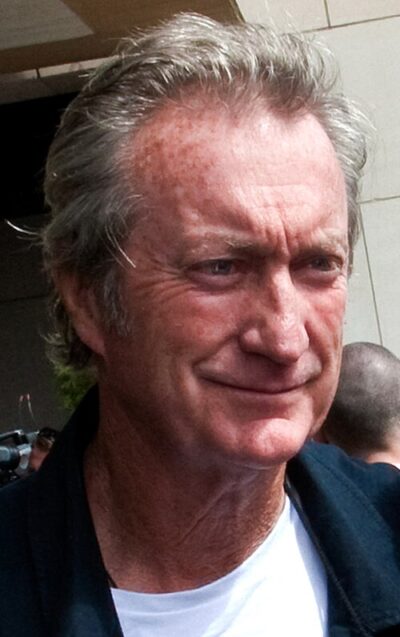
Bryan Brown
Bryan Brown is an Australian actor. Born June 23, 1947, in Sydney. Awards include Member of the Order of Australia.
Facts
13 facts · 1 confirmed by two sources · 6 cited · 6 from one source
Where this comes from
Papalocal keeps its own record. It started from these sources; what each one said is kept here as it was copied, so a change on their side never changes this page by itself. Tap one to read its version.
What Wikidata says · copied November 16, 2026 · revision 2555335205
- Described as
- Australian actor
- Other names
- Bryan Neathway Brown
- Born
- June 23, 1947 · 3 references
- Born in
- Sydney · 1 reference
- Name at birth
- Bryan Neathway Brown
- Citizen of
- Australia
- Occupation
- stage actor; film actor; television actor; actor · 2 references
- Awards
- Member of the Order of Australia (2005) · 1 reference
- Spouse
- Rachel Ward (1983–) · 1 reference
- Children
- Rosie Brown · 1 reference; Matilda Brown · 1 reference
- Lived in
- Balmain East (2005) · 1 reference
- Wikipedias with a page
- 32
Wikidata item Q363659 (wikidata.org/wiki/Q363659), public domain (CC0). Copied November 16, 2026.
What Wikipedia says · copied November 16, 2026 · revision 1385991058
Bryan Neathway Brown AM (born 23 June 1947) is an Australian actor. He has performed in over eighty film and television projects since the late 1970s, both in his native Australia and abroad. Notable films include Breaker Morant (1980), Give My Regards to Broad Street (1984), F/X (1986), Tai-Pan (1986), Cocktail (1988), Gorillas in the Mist (1988), F/X2 (1991), Along Came Polly (2004), Australia (2008), Kill Me Three Times (2014) and Gods of Egypt (2016). He was nominated for a Golden Globe Award and an Emmy Award for his performance in the television miniseries The Thorn Birds (1983).
- Born, in its opening lines
- June 23, 1947
From the Wikipedia article “Bryan Brown” (en.wikipedia.org/wiki/Bryan_Brown), by its contributors, under CC BY-SA 4.0 (creativecommons.org/licenses/by-sa/4.0/). Copied November 16, 2026; not changed.
Confirmed Two sources agree. Cited One source, and it names where it got it. One source One source, without a reference of its own. Sources disagree The sources disagree. We show the best-supported value and keep theirs below.
