
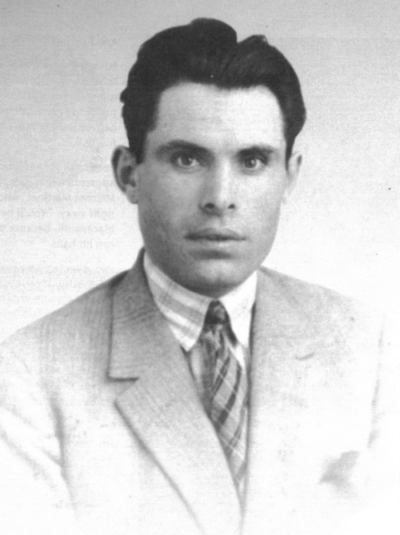
Buenaventura Durruti
Buenaventura Durruti was a Spanish anarchist. Born July 14, 1896, in León. Died November 20, 1936, in Madrid.
Facts
27 facts · 2 confirmed by two sources · 5 cited · 19 from one source · 1 where the sources disagree
What’s different
- Buried in: we show Montjuïc Cemetery (Sources disagree). Wikidata also lists Grave of Buenaventura Durruti
Where this comes from
Papalocal keeps its own record. It started from these sources; what each one said is kept here as it was copied, so a change on their side never changes this page by itself. Tap one to read its version.
What Wikidata says · copied November 16, 2026 · revision 2567936466
- Described as
- Spanish anarchist (1896-1936)
- Other names
- Buenaventura Durruti Domínguez, Buenaventura Durruti Dumange, José Buenaventura Durruti Dumange, José Buenaventura Durruti Domínguez, Durruti
- Born
- July 14, 1896 · 4 references
- Died
- November 20, 1936 · 3 references
- Born in
- León · 1 reference
- Died in
- Madrid · 1 reference
- Buried in
- Montjuïc Cemetery; Grave of Buenaventura Durruti
- Cause of death
- gunshot wound
- Name at birth
- José Buenaventura Durruti Domínguez · 1 reference
- Citizen of
- Spain · 1 reference
- Occupation
- anarcho-syndicalist; anarchist · 2 references; trade unionist; politician · 1 reference; mechanic; anarchist militiaman
- Worked for
- Compañía de los Caminos de Hierro del Norte de España
- Member of
- Confederación Nacional del Trabajo; Los Solidarios; Iberian Anarchist Federation; anarchist confederal militia
- Spouse
- Émilienne Morin
- Children
- Colette Durruti
- Father
- Santiago Durruti
- Mother
- Anastasia Dumange
- Siblings
- Pedro Durruti; Rosa Durruti; Manuel Durruti
- Religion
- atheism
- Wikipedias with a page
- 57
Wikidata item Q208815 (wikidata.org/wiki/Q208815), public domain (CC0). Copied November 16, 2026.
What Wikipedia says · copied November 16, 2026 · revision 1365819803
José Buenaventura Durruti Dumange (Spanish: [xoˈse βwenaβenˈtuɾa ðuˈruti ðuˈmaŋge]; 14 July 1896 – 20 November 1936) was a Spanish anarcho-syndicalist militant and a leading figure in Spanish anarchism before and during the Spanish Civil War. As a prominent member of the Confederación Nacional del Trabajo (CNT) and the Federación Anarquista Ibérica (FAI), Durruti was a key participant in the Spanish Revolution of 1936, and is remembered as a hero and martyr by the anarchist movement.
Originally a mechanic and trade unionist from León, Durruti was radicalized by state repression of the labor movement. In the 1920s, he became a leader of the anarchist affinity group Los Solidarios, which carried out bank robberies, termed "expropriations", to fund their revolutionary activities, as well as assassinations of those they held responsible for the oppression of the working class. Forced into exile, he coordinated militant activities from France and engaged in a series of expropriations across Latin America with the group Los Errantes. After returning to Spain with the proclamation of the Republic in 1931, he became one of the primary organizers of the CNT's insurrectionist wing, leading several unsuccessful uprisings for which he was repeatedly imprisoned and deported.
At the outbreak of the Civil War in July 1936, Durruti was a key figure in defeating the Nationalist military uprising in Barcelona. He subsequently organized and led the Durruti Column, one of the largest and most famous anarchist militias, which fought on the Aragon front. There, alongside combat operations, he helped implement libertarian communism in the controlled territories. In November 1936, as Nationalist forces laid siege to Madrid, he led his column to the capital to aid in its defense. On 19 November, he was mortally wounded by a gunshot while fighting in the Casa de Campo park. The circumstances of his death are disputed, with historians debating whether he was killed by enemy fire, friendly fire, or treachery.
Durruti's death was a significant blow to the anarchist movement and the Republican war effort. His funeral procession in Barcelona drew hundreds of thousands of mourners in one of the largest public demonstrations in the city's history. He became an enduring symbol of the revolutionary spirit of Spanish anarchism, praised by anarchists for his ideological conviction, leadership, and personal dedication. His legacy influenced later anarchist groups, such as the Friends of Durruti Group, and he remains one of the most iconic figures of the Spanish Civil War.
- Born, in its opening lines
- July 14, 1896
- Died, in its opening lines
- November 20, 1936
From the Wikipedia article “Buenaventura Durruti” (en.wikipedia.org/wiki/Buenaventura_Durruti), by its contributors, under CC BY-SA 4.0 (creativecommons.org/licenses/by-sa/4.0/). Copied November 16, 2026; not changed.
Confirmed Two sources agree. Cited One source, and it names where it got it. One source One source, without a reference of its own. Sources disagree The sources disagree. We show the best-supported value and keep theirs below.
