
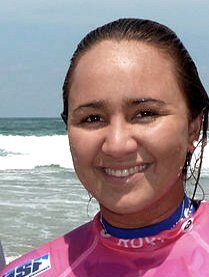
Carissa Moore
Carissa Moore is a Native Hawaiian-American surfer. Born August 27, 1992, in Honolulu. Awards include James E. Sullivan Award.
Facts
7 facts · 1 confirmed by two sources · 4 cited · 2 from one source
Where this comes from
Papalocal keeps its own record. It started from these sources; what each one said is kept here as it was copied, so a change on their side never changes this page by itself. Tap one to read its version.
What Wikidata says · copied November 16, 2026 · revision 2516584830
- Described as
- Native Hawaiian-American surfer
- Other names
- Carissa Kainani Moore
- Born
- August 27, 1992 · 1 reference
- Born in
- Honolulu · 1 reference
- Citizen of
- United States
- Occupation
- surfer · 2 references
- Sport
- surfing · 5 references
- Awards
- James E. Sullivan Award (2022) · 1 reference
- Height
- 1.70 m (5 ft 7 in) · 1 reference
- Wikipedias with a page
- 20
Wikidata item Q2938849 (wikidata.org/wiki/Q2938849), public domain (CC0). Copied November 16, 2026.
What Wikipedia says · copied November 16, 2026 · revision 1373276062
Carissa Kainani Moore (born August 27, 1992) is an American surfer. She was the first-ever winner of the Olympic gold medal in women's shortboard surfing at the 2020 Summer Olympics. She is also a five-time world champion, winning in 2011, 2013, 2015, 2019 and 2021 on the World Surf League WSL Women's World Tour. Moore was the first surfer in history to win a WSL world title and the Olympic title in the same year.
In 2013, she was named by Glamour magazine as one of their Women of the Year. She became a member of the Surfers' Hall of Fame in 2014. In 2022, Moore was featured in Naomi Hirahara's anthology We Are Here: 30 Inspiring Asian Americans and Pacific Islanders Who Have Shaped the United States that was published by the Smithsonian Institution and Running Press Kids.
- Born, in its opening lines
- August 27, 1992
From the Wikipedia article “Carissa Moore” (en.wikipedia.org/wiki/Carissa_Moore), by its contributors, under CC BY-SA 4.0 (creativecommons.org/licenses/by-sa/4.0/). Copied November 16, 2026; not changed.
Confirmed Two sources agree. Cited One source, and it names where it got it. One source One source, without a reference of its own. Sources disagree The sources disagree. We show the best-supported value and keep theirs below.
