
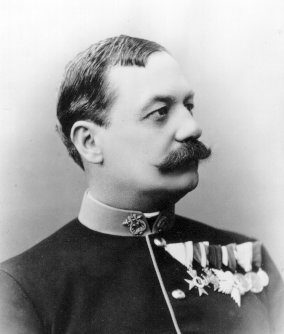
Carl Michael Ziehrer
Carl Michael Ziehrer was an Austrian composer. Born May 2, 1843, in Vienna. Died November 14, 1922, in Vienna. Positions held include Imperial Court Ball Music Director (1908–1918) and military bandmaster. Educated at University of Music and Performing Arts Vienna.
Facts
16 facts · 2 confirmed by two sources · 5 cited · 9 from one source
Where this comes from
Papalocal keeps its own record. It started from these sources; what each one said is kept here as it was copied, so a change on their side never changes this page by itself. Tap one to read its version.
What Wikidata says · copied November 18, 2026 · revision 2567488860
- Described as
- Austrian composer (1843–1922)
- Other names
- C. M. Ziehrer, Karl Michael Ziehrer
- Born
- May 2, 1843 · 9 references
- Died
- November 14, 1922 · 9 references
- Born in
- Vienna · 2 references
- Died in
- Vienna · 1 reference
- Buried in
- Vienna Central Cemetery
- Citizen of
- Austria
- Occupation
- composer · 1 reference; conductor · 1 reference
- Positions held
- Imperial Court Ball Music Director (1908–1918) · 1 reference; military bandmaster · 1 reference
- Education
- University of Music and Performing Arts Vienna
- Genre
- opera; instrumental music · 1 reference; operetta · 1 reference
- Instrument
- violin
- Spouse
- Marianne Edelmann (1888–1922)
- Wikipedias with a page
- 22
Wikidata item Q696576 (wikidata.org/wiki/Q696576), public domain (CC0). Copied November 18, 2026.
What Wikipedia says · copied November 18, 2026 · revision 1379778974
Carl Michael Ziehrer (more rarely spelled Karl Michael Ziehrer) (2 May 1843 – 14 November 1922) was an Austrian composer. In his lifetime, he was one of the fiercest rivals of the Strauss family; most notably Johann Strauss II and Eduard Strauss.
- Born, in its opening lines
- May 2, 1843
- Died, in its opening lines
- November 14, 1922
From the Wikipedia article “Carl Michael Ziehrer” (en.wikipedia.org/wiki/Carl_Michael_Ziehrer), by its contributors, under CC BY-SA 4.0 (creativecommons.org/licenses/by-sa/4.0/). Copied November 18, 2026; not changed.
Confirmed Two sources agree. Cited One source, and it names where it got it. One source One source, without a reference of its own. Sources disagree The sources disagree. We show the best-supported value and keep theirs below.
