
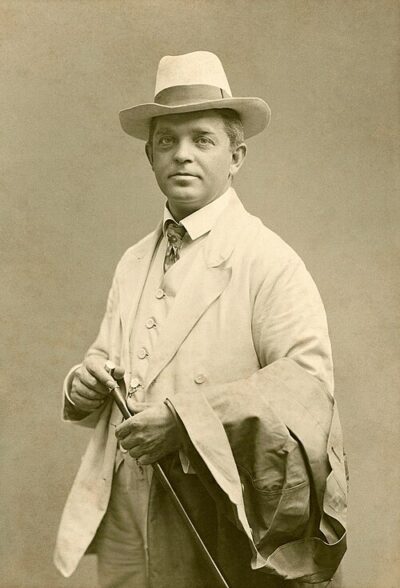
Carl Nielsen
Carl Nielsen was a Danish composer. Born June 9, 1865, in Sortelung. Died October 3, 1931, in Copenhagen. Known for Min Jesus, lad mit hjerte få, Clarinet Concerto and Forunderligt at sige. Educated at Royal Danish Academy of Music. Awards include commander of the Order of the Dannebrog.
Facts
39 facts · 2 confirmed by two sources · 12 cited · 25 from one source
Where this comes from
Papalocal keeps its own record. It started from these sources; what each one said is kept here as it was copied, so a change on their side never changes this page by itself. Tap one to read its version.
What Wikidata says · copied November 16, 2026 · revision 2563858260
- Described as
- Danish composer (1865–1931)
- Other names
- Carl August Nielsen
- Born
- June 9, 1865 · 7 references
- Died
- October 3, 1931 · 12 references
- Born in
- Sortelung · 1 reference
- Died in
- Copenhagen · 4 references
- Buried in
- Vestre Cemetery · 1 reference
- Cause of death
- myocardial infarction
- Name at birth
- Carl August Nielsen
- Citizen of
- Kingdom of Denmark · 1 reference
- Occupation
- conductor · 1 reference; classical composer; choreographer; autobiographer; music educator; pianist; composer · 2 references; violinist · 1 reference
- Education
- Royal Danish Academy of Music
- Genre
- opera; symphony
- Instrument
- flugelhorn; piano; violin · 2 references; alto trombone · 1 reference; trumpet · 1 reference; bugle · 1 reference
- Known for
- Min Jesus, lad mit hjerte få; Clarinet Concerto; Forunderligt at sige; Den milde dag er lys og lang; Min pige er så lys som rav; Irmelin Rose
- Awards
- commander of the Order of the Dannebrog (1925)
- Spouse
- Anne Marie Carl-Nielsen (1891–) · 1 reference
- Children
- Anne Marie Telmányi
- Lived in
- Nørre Lyndelse Parish; Nyhavn; Frederiksgade; Frederiksholms Kanal
- Website
- http://carlnielsen.dk · 1 reference
- Wikipedias with a page
- 50
Wikidata item Q205139 (wikidata.org/wiki/Q205139), public domain (CC0). Copied November 16, 2026.
What Wikipedia says · copied November 16, 2026 · revision 1378251534
Carl August Nielsen (Danish: [ˈkʰɑˀl ˈne̝lsn̩]; 9 June 1865 – 3 October 1931) was a Danish composer, conductor, and violinist, widely recognized as his country's most prominent composer.
Brought up by poor yet musically talented parents on the island of Funen, he demonstrated his musical abilities at an early age. He initially played in a military band before attending the Royal Danish Academy of Music in Copenhagen from 1884 until December 1886. He premiered his Op. 1, Suite for Strings, in 1888, at the age of 23. The following year, Nielsen began a 16-year stint as a second violinist in the Royal Danish Orchestra under the conductor Johan Svendsen, during which he played in Verdi's Falstaff and Otello at their Danish premieres. In 1916, he took a post teaching at the Royal Danish Academy and continued to work there until his death.
Although his symphonies, concertos and choral music are now internationally acclaimed, Nielsen's career and personal life were marked by many difficulties, often reflected in his music. The works he composed between 1897 and 1904 are sometimes ascribed to his "psychological" period, resulting mainly from a turbulent marriage with the sculptor Anne Marie Brodersen. Nielsen is especially noted for his six symphonies, his Wind Quintet and his concertos for violin, flute and clarinet. In Denmark, his opera Maskarade and many of his songs have become an integral part of the national heritage. His early music was inspired by composers such as Johannes Brahms and Edvard Grieg, but he soon developed his own style, first experimenting with progressive tonality and later diverging even more radically from the standards of composition still common at the time. Nielsen's sixth and final symphony, Sinfonia semplice, was written in 1924–25. He died from a heart attack six years later, and is buried in Vestre Cemetery, Copenhagen.
Nielsen maintained the reputation of a musical outsider during his lifetime, both in his own country and internationally. It was only later that his works firmly entered the international repertoire, accelerating in popularity from the 1960s through Leonard Bernstein and others. In Denmark, Nielsen's reputation was sealed in 2006 when four of his works were listed by the Danish Ministry of Culture amongst the greatest pieces of Danish classical music. For many years, he appeared on the Danish hundred-kroner banknote. The Carl Nielsen Museum in Odense documents his life and that of his wife. Between 1994 and 2009 the Royal Danish Library, sponsored by the Danish government, completed the Carl Nielsen Edition, freely available online, containing background information and sheet music for all of Nielsen's works, many of which had not been previously published.
- Born, in its opening lines
- June 9, 1865
- Died, in its opening lines
- October 3, 1931
From the Wikipedia article “Carl Nielsen” (en.wikipedia.org/wiki/Carl_Nielsen), by its contributors, under CC BY-SA 4.0 (creativecommons.org/licenses/by-sa/4.0/). Copied November 16, 2026; not changed.
Confirmed Two sources agree. Cited One source, and it names where it got it. One source One source, without a reference of its own. Sources disagree The sources disagree. We show the best-supported value and keep theirs below.
