
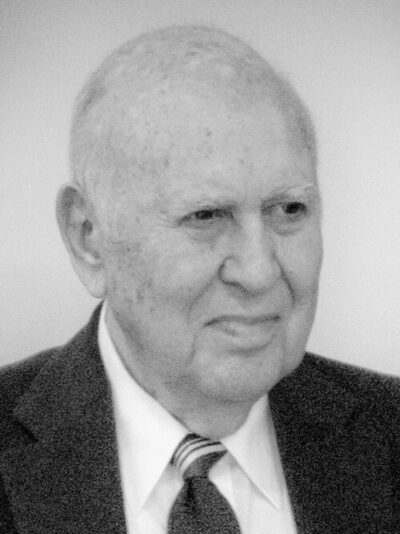
Carl Reiner
Carl Reiner was an American actor. Born March 20, 1922, in The Bronx. Died June 29, 2020, in Beverly Hills. Educated at Georgetown University and Walsh School of Foreign Service. Awards include Mark Twain Prize for American Humor, Primetime Emmy Award for Outstanding Supporting Actor in a Comedy Series (2 times) and Primetime Emmy Award for Outstanding Guest Actor in a Comedy Series.
Facts
31 facts · 2 confirmed by two sources · 11 cited · 18 from one source
Where this comes from
Papalocal keeps its own record. It started from these sources; what each one said is kept here as it was copied, so a change on their side never changes this page by itself. Tap one to read its version.
What Wikidata says · copied November 13, 2026 · revision 2567175605
- Described as
- American actor
- Other names
- Carlton Reiner
- Born
- March 20, 1922
- Died
- June 29, 2020
- Born in
- The Bronx
- Died in
- Beverly Hills · 1 reference
- Citizen of
- United States
- Occupation
- film director · 1 reference; screenwriter · 1 reference; film producer · 1 reference; television producer; writer; voice actor; comedian · 1 reference; director · 1 reference
- Political party
- Democratic Party
- Education
- Georgetown University; Walsh School of Foreign Service; Evander Childs Educational Campus
- Awards
- Mark Twain Prize for American Humor (2000); Primetime Emmy Award for Outstanding Supporting Actor in a Comedy Series (2 times) (1957, 1958); Primetime Emmy Award for Outstanding Guest Actor in a Comedy Series (1995); Primetime Emmy Award for Outstanding Writing for a Comedy Series (3 times) (1962, 1963, 1964); star on Hollywood Walk of Fame · 1 reference
- Field
- film · 1 reference; creative and professional writing · 1 reference
- Spouse
- Estelle Reiner (1943–2008) · 2 references
- Children
- Rob Reiner · 1 reference; Sylivia Ann Reiner; Lucas Reiner · 1 reference
- Religion
- atheism
- Military branch
- United States Army Air Forces (1943–1946)
- Website
- https://www.randomcontent.com/
- Wikipedias with a page
- 91
Wikidata item Q287793 (wikidata.org/wiki/Q287793), public domain (CC0). Copied November 13, 2026.
What Wikipedia says · copied November 13, 2026 · revision 1381203119
Carl Reiner (; March 20, 1922 – June 29, 2020) was an American actor, author, comedian, director, and screenwriter whose career spanned seven decades. His awards and honors include 11 Primetime Emmy Awards, a Grammy Award, and the Mark Twain Prize for American Humor. He was inducted into the Television Hall of Fame in 1999.
During the early years of television comedy from 1950 to 1957, he appeared in and contributed sketch material for Your Show of Shows and Caesar's Hour (both of which starred Sid Caesar), writing alongside Mel Brooks, Neil Simon, and Woody Allen. Reiner teamed up with Brooks and together they released several iconic comedy albums, beginning with 2000 Years with Carl Reiner and Mel Brooks (1960). Reiner was also the creator of The Dick Van Dyke Show, which ran from 1961 to 1966 and which Reiner also produced, frequently wrote, and appeared in.
Reiner formed a comedy duo with Brooks in "The 2000 Year Old Man" and acted in such films as It's a Mad, Mad, Mad, Mad World (1963), The Russians Are Coming, the Russians Are Coming (1966), and the Ocean's film series (2001–2007). Reiner directed such comedies as Enter Laughing (1966), Where's Poppa? (1970), and Oh, God! (1977). Reiner had a successful collaboration with Steve Martin, directing some of his most successful films, including The Jerk (1979), Dead Men Don't Wear Plaid (1982), The Man with Two Brains (1983), and All of Me (1984).
Reiner wrote more than two dozen books, mostly in his later years. He was the father of the actor-director Rob Reiner, author Annie Reiner, and artist Lucas Reiner, and he was the adoptive grandfather of Tracy Reiner.
- Born, in its opening lines
- March 20, 1922
- Died, in its opening lines
- June 29, 2020
From the Wikipedia article “Carl Reiner” (en.wikipedia.org/wiki/Carl_Reiner), by its contributors, under CC BY-SA 4.0 (creativecommons.org/licenses/by-sa/4.0/). Copied November 13, 2026; not changed.
Confirmed Two sources agree. Cited One source, and it names where it got it. One source One source, without a reference of its own. Sources disagree The sources disagree. We show the best-supported value and keep theirs below.
