
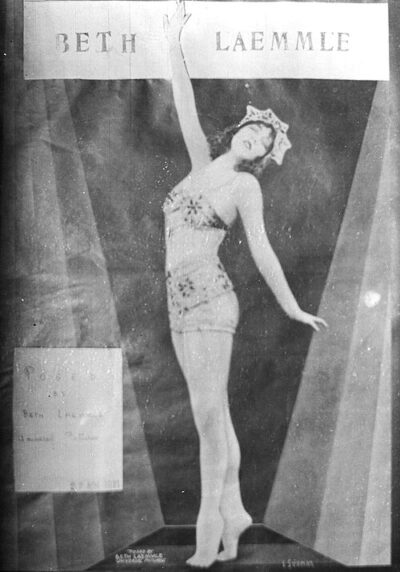
Carla Laemmle
Carla Laemmle was an American actress. Born October 20, 1909, in Chicago. Died June 12, 2014, in Los Angeles.
Facts
12 facts · 2 confirmed by two sources · 3 cited · 7 from one source
Where this comes from
Papalocal keeps its own record. It started from these sources; what each one said is kept here as it was copied, so a change on their side never changes this page by itself. Tap one to read its version.
What Wikidata says · copied November 16, 2026 · revision 2553140122
- Described as
- American actress (1909-2014)
- Other names
- Rebekah Isabelle Laemmle, Beth Laemmle, Rebecca Laemmle, Rebekah Laemmle
- Born
- October 20, 1909 · 2 references
- Died
- June 12, 2014 · 2 references
- Born in
- Chicago · 1 reference
- Died in
- Los Angeles · 1 reference
- Buried in
- Home of Peace Cemetery
- Cause of death
- disease
- Name at birth
- Rebekah Isabelle Laemmle
- Citizen of
- United States
- Occupation
- actor · 1 reference; film actor
- Father
- Joseph Laemmle
- Siblings
- Edward Laemmle · 1 reference
- Wikipedias with a page
- 23
Wikidata item Q260337 (wikidata.org/wiki/Q260337), public domain (CC0). Copied November 16, 2026.
What Wikipedia says · copied November 16, 2026 · revision 1379436408
Rebekah Isabelle Laemmle (October 20, 1909 – June 12, 2014), known professionally as Carla Laemmle and occasionally as Beth Laemmle, was an American actress and dancer, and the niece of Universal Pictures studio founder Carl Laemmle. As an actress/dancer, she is known primarily for her roles in The Phantom of the Opera (1925) and Dracula (1931). At the time of her death, she was one of the last surviving actors of the silent film era, with her career spanning nearly nine decades, also with one of the longest gaps.
- Born, in its opening lines
- October 20, 1909
- Died, in its opening lines
- June 12, 2014
From the Wikipedia article “Carla Laemmle” (en.wikipedia.org/wiki/Carla_Laemmle), by its contributors, under CC BY-SA 4.0 (creativecommons.org/licenses/by-sa/4.0/). Copied November 16, 2026; not changed.
Confirmed Two sources agree. Cited One source, and it names where it got it. One source One source, without a reference of its own. Sources disagree The sources disagree. We show the best-supported value and keep theirs below.
