
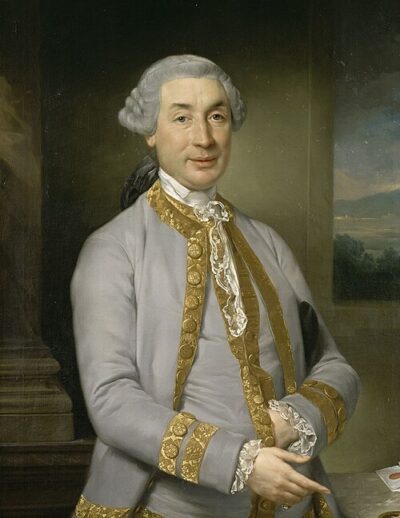
Carlo Bonaparte
Carlo Bonaparte was a Father of Napoleon Bonaparte. Born March 29, 1746, in Ajaccio. Died February 24, 1785, in Montpellier.
Facts
29 facts · 1 confirmed by two sources · 16 cited · 11 from one source · 1 where the sources disagree
What’s different
- Born: we show March 29, 1746 (Sources disagree). Wikipedia says March 27, 1746
Where this comes from
Papalocal keeps its own record. It started from these sources; what each one said is kept here as it was copied, so a change on their side never changes this page by itself. Tap one to read its version.
What Wikidata says · copied November 16, 2026 · revision 2557833260
- Described as
- Father of Napoleon Bonaparte (1746-1785)
- Other names
- Carlos de Bonaparte, Carlo Maria di Buonaparte, Charles-Marie Bonaparte, Carlo Maria Buonaparte
- Born
- March 29, 1746 · 5 references
- Died
- February 24, 1785 · 5 references
- Born in
- Ajaccio · 1 reference
- Died in
- Montpellier · 1 reference
- Buried in
- Chapelle Impériale
- Cause of death
- stomach cancer
- Citizen of
- France
- Occupation
- assessor; lawyer; politician · 1 reference; jurist · 1 reference
- Spouse
- Maria-Letizia Bonaparte (1764–) · 3 references
- Children
- Joseph Bonaparte; Napoleon · 1 reference; Lucien Bonaparte · 1 reference; Elisa Bonaparte; Louis Bonaparte; Pauline Bonaparte; Caroline Bonaparte · 1 reference; Jérôme Bonaparte; Napoleone Buonaparte · 1 reference; Maria Anna Bonaparte · 1 reference; Maria Anna Bonaparte · 1 reference; unnamed daughter Bonaparte · 1 reference
- Father
- Giuseppe Maria Buonaparte · 1 reference
- Mother
- Maria Saveria Paravicini · 1 reference
- Siblings
- Maria Getrude Buonaparte · 1 reference; Sebastiano Buonaparte · 1 reference; Marianna Buonaparte · 1 reference
- Wikipedias with a page
- 51
Wikidata item Q151869 (wikidata.org/wiki/Q151869), public domain (CC0). Copied November 16, 2026.
What Wikipedia says · copied November 16, 2026 · revision 1385699350
Carlo Maria Buonaparte (27 March 1746 – 24 February 1785), also known as Carlo Maria di Buonaparte and Charles-Marie Bonaparte, was a Corsican attorney, nobleman, and official, best known as the father of Napoleon Bonaparte and paternal grandfather of Napoleon III.
Initially a supporter of Corsican independence, he briefly served as an aide to Pasquale Paoli, fighting against the Republic of Genoa and later resisting the French invasion. After France annexed Corsica, he aligned with the new regime, and in 1777, he became the island’s representative at the court of Louis XVI. 20 years after his death, his second surviving son, Napoleon, became Emperor of the French, elevating several of his siblings to royal status through marriage and noble titles.
- Born, in its opening lines
- March 27, 1746
- Died, in its opening lines
- February 24, 1785
From the Wikipedia article “Carlo Buonaparte” (en.wikipedia.org/wiki/Carlo_Buonaparte), by its contributors, under CC BY-SA 4.0 (creativecommons.org/licenses/by-sa/4.0/). Copied November 16, 2026; not changed.
Confirmed Two sources agree. Cited One source, and it names where it got it. One source One source, without a reference of its own. Sources disagree The sources disagree. We show the best-supported value and keep theirs below.
