
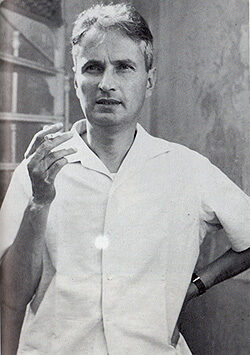
Carlo Cassola
Carlo Cassola was an Italian novelist. Born March 17, 1917, in Rome. Died January 29, 1987, in Montecarlo. Awards include Strega Prize, Bagutta Prize and Napoli Prize.
Facts
24 facts · 2 confirmed by two sources · 6 cited · 16 from one source
Where this comes from
Papalocal keeps its own record. It started from these sources; what each one said is kept here as it was copied, so a change on their side never changes this page by itself. Tap one to read its version.
What Wikidata says · copied November 18, 2026 · revision 2565843446
- Described as
- Italian novelist (1917-1987)
- Born
- March 17, 1917 · 8 references
- Died
- January 29, 1987 · 9 references
- Born in
- Rome · 2 references
- Died in
- Montecarlo · 1 reference
- Citizen of
- Italy (1946–); Kingdom of Italy (–1946)
- Occupation
- writer · 3 references; politician; novelist; screenwriter; essayist · 1 reference; partisan
- Political party
- Action Party
- Member of
- Accademia delle Arti del Disegno
- Awards
- Strega Prize (1960); Bagutta Prize (1978); Napoli Prize (1970); Grifone d'Oro (1959) · 1 reference; Bancarella Literary Prize (1976) · 1 reference; Premio Selezione Campiello
- Spouse
- Rosa Falchi (1940–1949); Giuseppina Rabagli (1951–); Pola Natali (1986–1987)
- Father
- Garzia Cassola · 1 reference
- Wikipedias with a page
- 20
Wikidata item Q530655 (wikidata.org/wiki/Q530655), public domain (CC0). Copied November 18, 2026.
What Wikipedia says · copied November 18, 2026 · revision 1380365384
Carlo Cassola (17 March 1917 – 29 January 1987) was an Italian novelist and essayist. His novel La Ragazza di Bube (1960), which received the Strega Prize, was adapted into a film of the same name by Luigi Comencini in 1963.
- Born, in its opening lines
- March 17, 1917
- Died, in its opening lines
- January 29, 1987
From the Wikipedia article “Carlo Cassola” (en.wikipedia.org/wiki/Carlo_Cassola), by its contributors, under CC BY-SA 4.0 (creativecommons.org/licenses/by-sa/4.0/). Copied November 18, 2026; not changed.
Confirmed Two sources agree. Cited One source, and it names where it got it. One source One source, without a reference of its own. Sources disagree The sources disagree. We show the best-supported value and keep theirs below.
