
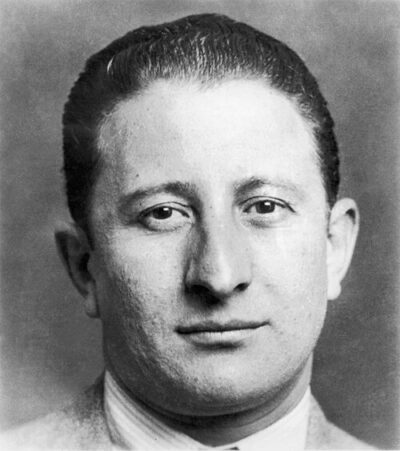
Carlo Gambino
Carlo Gambino was an American mobster. Born August 24, 1902, in Palermo. Died October 15, 1976, in Massapequa.
Facts
11 facts · 2 confirmed by two sources · 0 cited · 9 from one source
Where this comes from
Papalocal keeps its own record. It started from these sources; what each one said is kept here as it was copied, so a change on their side never changes this page by itself. Tap one to read its version.
What Wikidata says · copied November 16, 2026 · revision 2528485772
- Described as
- American mobster (1902–1976)
- Other names
- Carlo "Don Carlo" Gambino
- Born
- August 24, 1902 · 3 references
- Died
- October 15, 1976 · 4 references
- Born in
- Palermo
- Died in
- Massapequa
- Buried in
- St. John Cemetery
- Cause of death
- myocardial infarction
- Citizen of
- Italy (1946–); Kingdom of Italy (–1946)
- Occupation
- criminal; godfather
- Children
- Thomas Gambino
- Wikipedias with a page
- 30
Wikidata item Q452127 (wikidata.org/wiki/Q452127), public domain (CC0). Copied November 16, 2026.
What Wikipedia says · copied November 16, 2026 · revision 1385154908
Carlo Gambino (Italian: [ˈkarlo ɡamˈbiːno]; August 24, 1902 – October 15, 1976) was a Sicilian crime boss who was the leader and namesake of the Gambino crime family of New York City. Following the Apalachin Meeting in 1957, and the imprisonment of Vito Genovese in 1959, Gambino took over the Commission of the American Mafia and played a powerful role in organized crime until his death from a heart attack in 1976. During a criminal career that spanned over fifty years, Gambino served only twenty-two months in prison, for a tax evasion charge in 1937.
- Born, in its opening lines
- August 24, 1902
- Died, in its opening lines
- October 15, 1976
From the Wikipedia article “Carlo Gambino” (en.wikipedia.org/wiki/Carlo_Gambino), by its contributors, under CC BY-SA 4.0 (creativecommons.org/licenses/by-sa/4.0/). Copied November 16, 2026; not changed.
Confirmed Two sources agree. Cited One source, and it names where it got it. One source One source, without a reference of its own. Sources disagree The sources disagree. We show the best-supported value and keep theirs below.
