
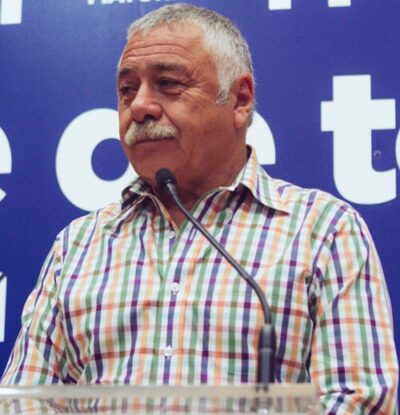
Carlos Caszely is a Chilean footballer. Born July 5, 1950, in Santiago. Teams include RCD Espanyol de Barcelona (1974–1978), Club Social y Deportivo Colo-Colo (2 times) (1967–1985) and Levante UD (1973–1974). Educated at University of Santiago.
Facts
14 facts · 1 confirmed by two sources · 0 cited · 13 from one source
Where this comes from
Papalocal keeps its own record. It started from these sources; what each one said is kept here as it was copied, so a change on their side never changes this page by itself. Tap one to read its version.
What Wikidata says · copied November 17, 2026 · revision 2563210179
- Described as
- Chilean footballer
- Other names
- Carlos Humberto Caszely Garrido
- Born
- July 5, 1950 · 5 references
- Born in
- Santiago
- Name at birth
- Carlos Humberto Caszely Garrido
- Citizen of
- Chile
- Occupation
- association football player
- Education
- University of Santiago
- Teams
- RCD Espanyol de Barcelona (1974–1978); Club Social y Deportivo Colo-Colo (2 times) (1967–1985); Levante UD (1973–1974); Barcelona S.C. (1986); Catalonia national football team (1976); Chile men's national football team (1969–1985)
- Sport
- association football
- Height
- 1.72 m (5 ft 8 in)
- Wikipedias with a page
- 26
Wikidata item Q472401 (wikidata.org/wiki/Q472401), public domain (CC0). Copied November 17, 2026.
What Wikipedia says · copied November 17, 2026 · revision 1382597143
Carlos Humberto Caszely Garrido (born 5 July 1950) is a Chilean former professional footballer, nicknamed "Rey del metro cuadrado" (English: King of the square meter, Portuguese: O Rei do Metro Quadrado), who played as a forward.
Regarded as one of Chile's most important players, between 1969 and 1985, Caszely won 48 caps and scored 29 goals for the Chile national team, including participations in the 1974 and 1982 World Cups.
- Born, in its opening lines
- July 5, 1950
From the Wikipedia article “Carlos Caszely” (en.wikipedia.org/wiki/Carlos_Caszely), by its contributors, under CC BY-SA 4.0 (creativecommons.org/licenses/by-sa/4.0/). Copied November 17, 2026; not changed.
Confirmed Two sources agree. Cited One source, and it names where it got it. One source One source, without a reference of its own. Sources disagree The sources disagree. We show the best-supported value and keep theirs below.
