
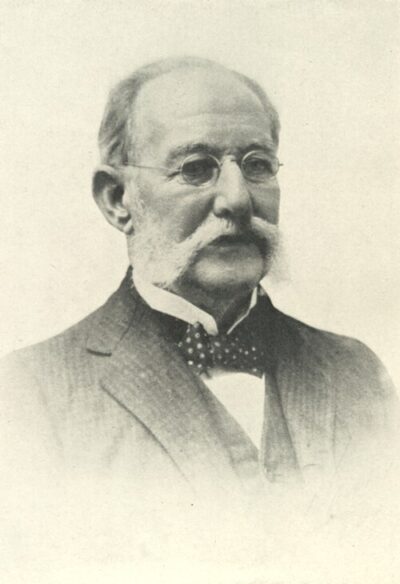
Carlos Juan Finlay
Carlos Juan Finlay was a Cuban physician discoverer of means of transmission of yellow fever through biological vector. Born December 3, 1833, in Camagüey. Died August 20, 1915, in Havana. Educated at Thomas Jefferson University. Awards include Legion of Honour.
Facts
13 facts · 2 confirmed by two sources · 3 cited · 8 from one source
What’s different
- Died: we show August 20, 1915 (Confirmed). Wikidata also lists August 19, 1915
Where this comes from
Papalocal keeps its own record. It started from these sources; what each one said is kept here as it was copied, so a change on their side never changes this page by itself. Tap one to read its version.
What Wikidata says · copied November 16, 2026 · revision 2567461693
- Described as
- Cuban physician discoverer of means of transmission of yellow fever through biological vector (1833–1915)
- Other names
- Charles J. Finlay
- Born
- December 3, 1833 · 7 references
- Died
- August 19, 1915 · 4 references; August 20, 1915 · 1 reference
- Born in
- Camagüey
- Died in
- Havana · 2 references
- Buried in
- Colón Cemetery, Havana · 1 reference
- Cause of death
- stroke
- Citizen of
- Cuba; Spain
- Occupation
- physician · 1 reference; medical researcher
- Education
- Thomas Jefferson University
- Awards
- Legion of Honour
- Field
- medicine
- Wikipedias with a page
- 35
Wikidata item Q742233 (wikidata.org/wiki/Q742233), public domain (CC0). Copied November 16, 2026.
What Wikipedia says · copied November 16, 2026 · revision 1376433675
Carlos Juan Finlay (December 3, 1833 – August 20, 1915) was a Cuban epidemiologist recognized as a pioneer in the research of yellow fever, determining that it was transmitted through mosquitoes Aedes aegypti.
- Born, in its opening lines
- December 3, 1833
- Died, in its opening lines
- August 20, 1915
From the Wikipedia article “Carlos Finlay” (en.wikipedia.org/wiki/Carlos_Finlay), by its contributors, under CC BY-SA 4.0 (creativecommons.org/licenses/by-sa/4.0/). Copied November 16, 2026; not changed.
Confirmed Two sources agree. Cited One source, and it names where it got it. One source One source, without a reference of its own. Sources disagree The sources disagree. We show the best-supported value and keep theirs below.
