
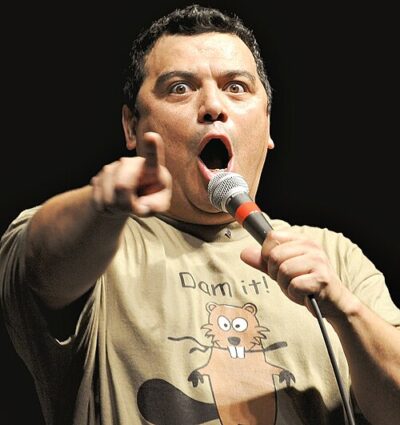
Carlos Mencia
Carlos Mencia is an American stand-up comedian. Born October 22, 1967, in San Pedro Sula. Educated at California State University, Los Angeles.
Facts
17 facts · 1 confirmed by two sources · 3 cited · 13 from one source
Where this comes from
Papalocal keeps its own record. It started from these sources; what each one said is kept here as it was copied, so a change on their side never changes this page by itself. Tap one to read its version.
What Wikidata says · copied November 13, 2026 · revision 2566929157
- Described as
- American stand-up comedian (born 1967)
- Other names
- Ned Arnel Mencía, Ned Mencía, Carlos Mencía, Ned Holness, Ned Arnel Mencia
- Born
- October 22, 1967 · 1 reference
- Born in
- San Pedro Sula
- Name at birth
- Ned Arnel Mencía
- Citizen of
- Honduras; United States · 1 reference
- Occupation
- stand-up comedian; actor · 1 reference; television producer; screenwriter; singer · 1 reference; dancer; voice actor
- Education
- California State University, Los Angeles
- Instrument
- voice
- Children
- Lucas Pablo Mencia
- Lived in
- Los Angeles
- Website
- https://carlosmencia.com/
- Wikipedias with a page
- 63
Wikidata item Q1043065 (wikidata.org/wiki/Q1043065), public domain (CC0). Copied November 13, 2026.
What Wikipedia says · copied November 13, 2026 · revision 1385553742
Ned Arnel Mencia (born October 22, 1967) known professionally as Carlos Mencía, is a Honduran-American comedian, writer, and actor. His style of comedy is often political and involves issues of race relations, Latin American culture, criminal justice, and social class. From 2005 to 2008, he hosted the Comedy Central show Mind of Mencia. Around the time of the show's cancellation, several comedians accused Mencía of plagiarism and stealing jokes.
- Born, in its opening lines
- October 22, 1967
From the Wikipedia article “Carlos Mencia” (en.wikipedia.org/wiki/Carlos_Mencia), by its contributors, under CC BY-SA 4.0 (creativecommons.org/licenses/by-sa/4.0/). Copied November 13, 2026; not changed.
Confirmed Two sources agree. Cited One source, and it names where it got it. One source One source, without a reference of its own. Sources disagree The sources disagree. We show the best-supported value and keep theirs below.
