
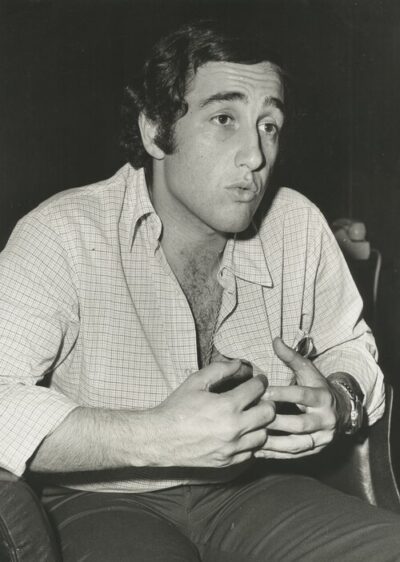
Carlos Pace
Carlos Pace was a Brazilian racing driver. Born October 6, 1944, in São Paulo. Died March 18, 1977, in Mairiporã.
Facts
9 facts · 2 confirmed by two sources · 1 cited · 6 from one source
Where this comes from
Papalocal keeps its own record. It started from these sources; what each one said is kept here as it was copied, so a change on their side never changes this page by itself. Tap one to read its version.
What Wikidata says · copied November 17, 2026 · revision 2551290791
- Described as
- Brazilian racing driver (1944-1977)
- Born
- October 6, 1944 · 1 reference
- Died
- March 18, 1977
- Born in
- São Paulo
- Died in
- Mairiporã
- Citizen of
- Brazil
- Occupation
- aircraft pilot; racing automobile driver · 1 reference; Formula One driver
- Sport
- auto racing
- Wikipedias with a page
- 28
Wikidata item Q171443 (wikidata.org/wiki/Q171443), public domain (CC0). Copied November 17, 2026.
What Wikipedia says · copied November 17, 2026 · revision 1385779199
José Carlos Pace (Brazilian Portuguese pronunciation: [ʒoˈzɛ ˈkaʁlus ˈpatʃi]; 6 October 1944 – 18 March 1977) was a Brazilian racing driver, who competed in Formula One from 1972 to 1977. Pace won the 1975 Brazilian Grand Prix with Brabham.
Born and raised in São Paulo, Pace competed in Formula One for Williams, Surtees and Brabham. He finished sixth in the World Drivers' Championship in 1975 with the latter.
In March 1977, Pace was killed in a light aircraft accident in Mairiporã. The Interlagos Circuit in São Paulo was renamed the Autódromo José Carlos Pace upon his death, home of the Brazilian Grand Prix since 1972 and the location of his sole victory in Formula One. It also is his final resting place since 2024.
- Born, in its opening lines
- October 6, 1944
- Died, in its opening lines
- March 18, 1977
From the Wikipedia article “Carlos Pace” (en.wikipedia.org/wiki/Carlos_Pace), by its contributors, under CC BY-SA 4.0 (creativecommons.org/licenses/by-sa/4.0/). Copied November 17, 2026; not changed.
Confirmed Two sources agree. Cited One source, and it names where it got it. One source One source, without a reference of its own. Sources disagree The sources disagree. We show the best-supported value and keep theirs below.
