
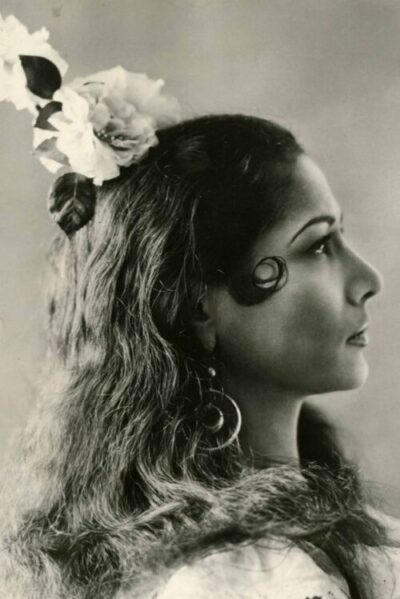
Carmen Amaya
Carmen Amaya was a Spanish flamenco dancer and singer. Born November 2, 1918, in Somorrostro. Died November 19, 1963, in Begur.
Facts
15 facts · 2 confirmed by two sources · 3 cited · 10 from one source
Where this comes from
Papalocal keeps its own record. It started from these sources; what each one said is kept here as it was copied, so a change on their side never changes this page by itself. Tap one to read its version.
What Wikidata says · copied November 16, 2026 · revision 2560441253
- Described as
- Spanish flamenco dancer and singer
- Other names
- Carmen Amaya Amaya
- Born
- November 2, 1918 · 3 references
- Died
- November 19, 1963 · 5 references
- Born in
- Somorrostro · 1 reference
- Died in
- Begur
- Buried in
- Ciriego cementery
- Name at birth
- Carmen Amaya Amaya
- Citizen of
- Spain
- Occupation
- singer; bailadora flamenca; actor · 1 reference; dancer · 1 reference
- Instrument
- voice
- Record label
- Decca; MCA Records
- Spouse
- Juan Antonio Agüero González
- Wikipedias with a page
- 54
Wikidata item Q242023 (wikidata.org/wiki/Q242023), public domain (CC0). Copied November 16, 2026.
What Wikipedia says · copied November 16, 2026 · revision 1380797324
Carmen Amaya Amaya (2 November 1918 – 19 November 1963), nicknamed La Capitana (English: The Captain) was a Spanish Romani flamenco dancer and singer, born in the Somorrostro district of Barcelona, Catalonia, Spain.
She is often hailed as "the greatest Flamenco dancer ever" and "the most extraordinary personality of all time in flamenco dance." She was the first female flamenco dancer to master footwork previously reserved for the best male dancers, due to its speed and intensity. She sometimes danced in high-waisted trousers as a symbol of her strong character.
- Born, in its opening lines
- November 2, 1918
- Died, in its opening lines
- November 19, 1963
From the Wikipedia article “Carmen Amaya” (en.wikipedia.org/wiki/Carmen_Amaya), by its contributors, under CC BY-SA 4.0 (creativecommons.org/licenses/by-sa/4.0/). Copied November 16, 2026; not changed.
Confirmed Two sources agree. Cited One source, and it names where it got it. One source One source, without a reference of its own. Sources disagree The sources disagree. We show the best-supported value and keep theirs below.
